
Last updated October 16, 2026
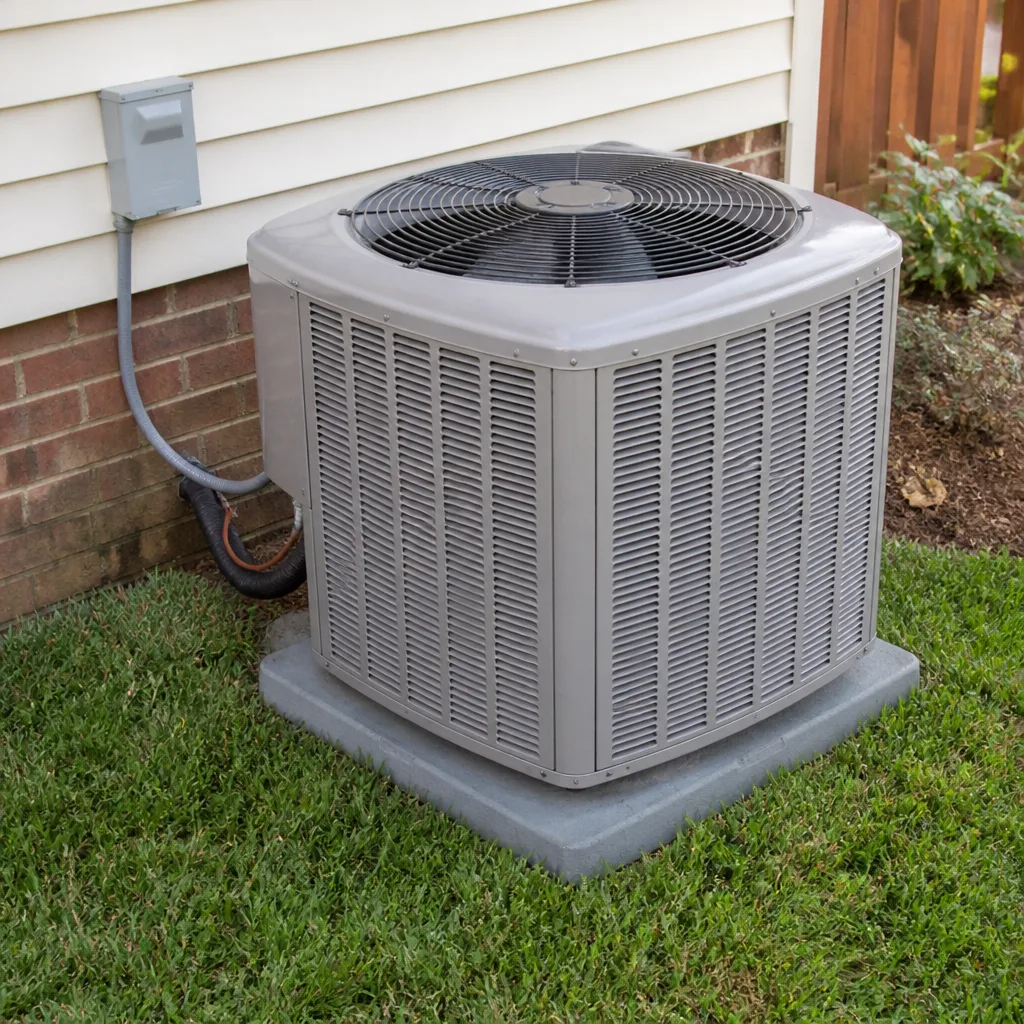 AC repair
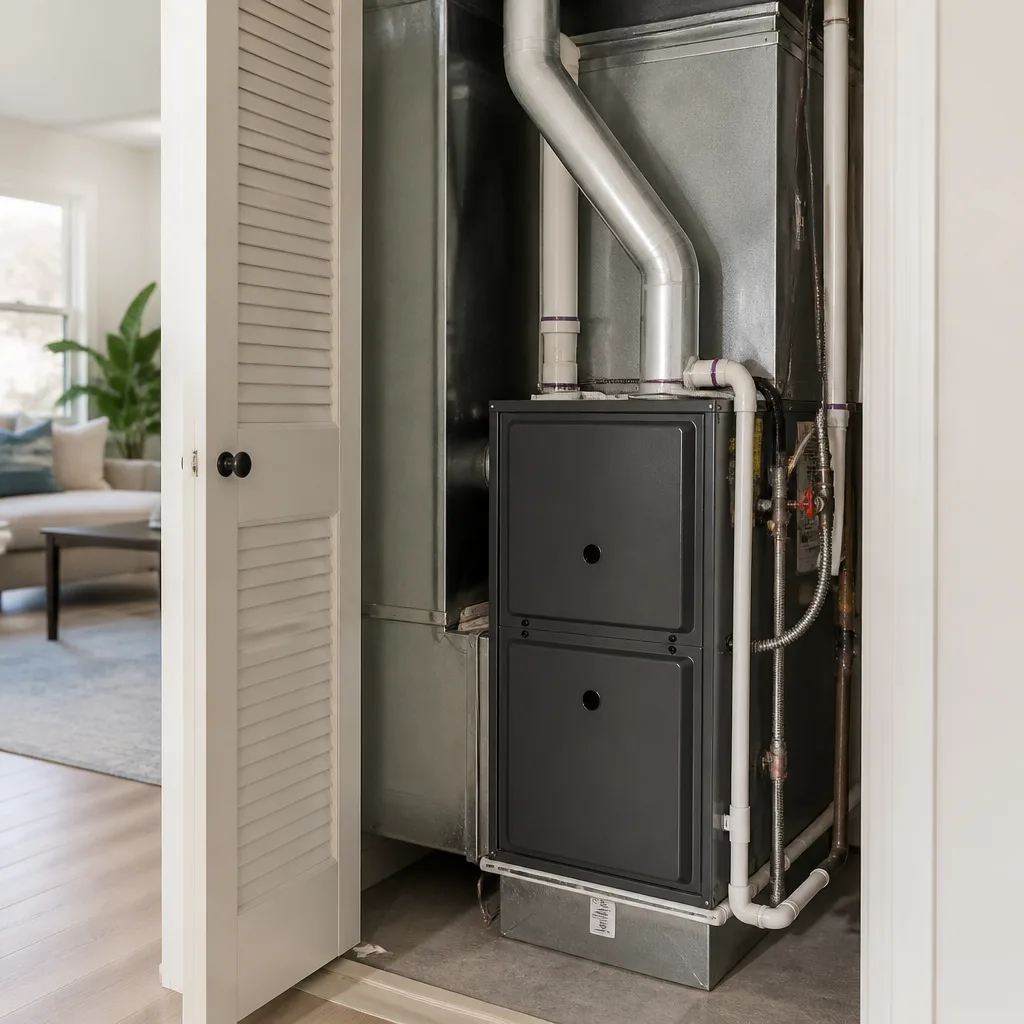 Furnace & heating
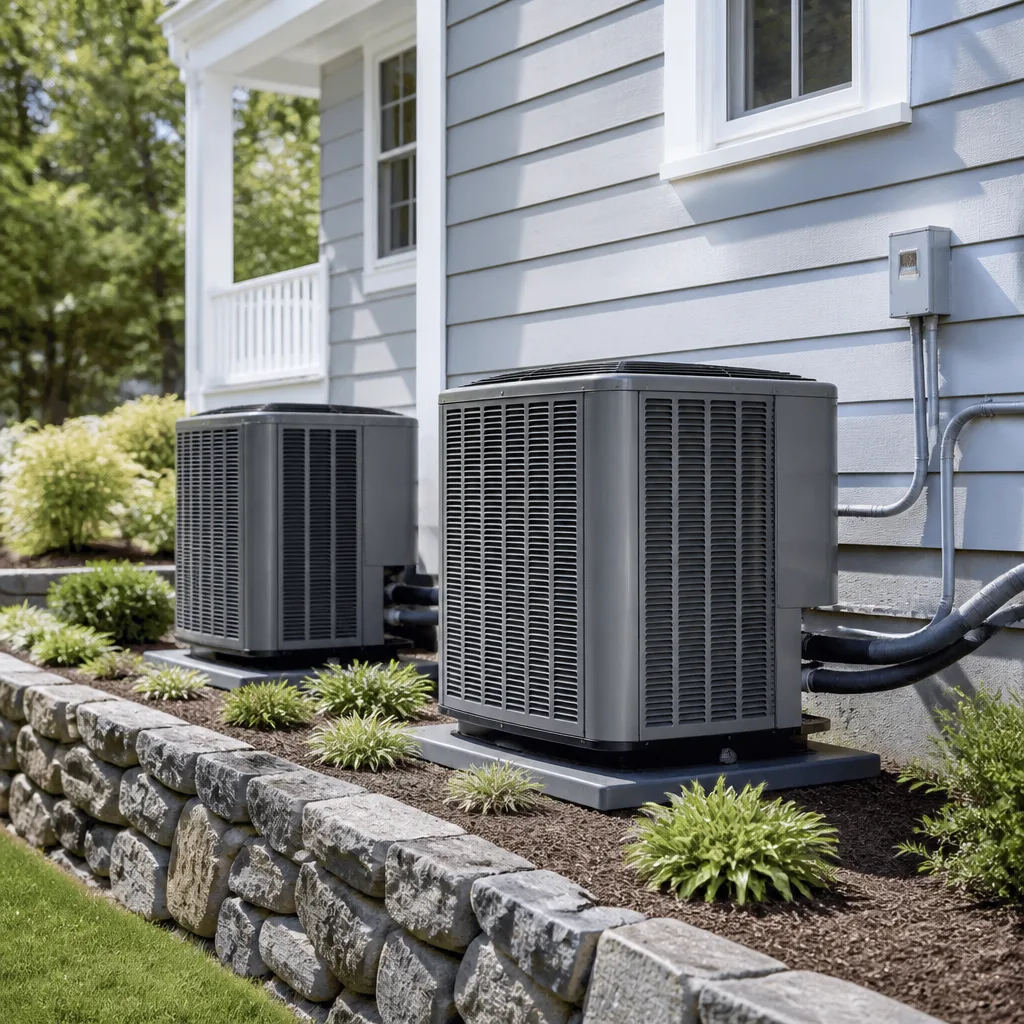 Heat pumps
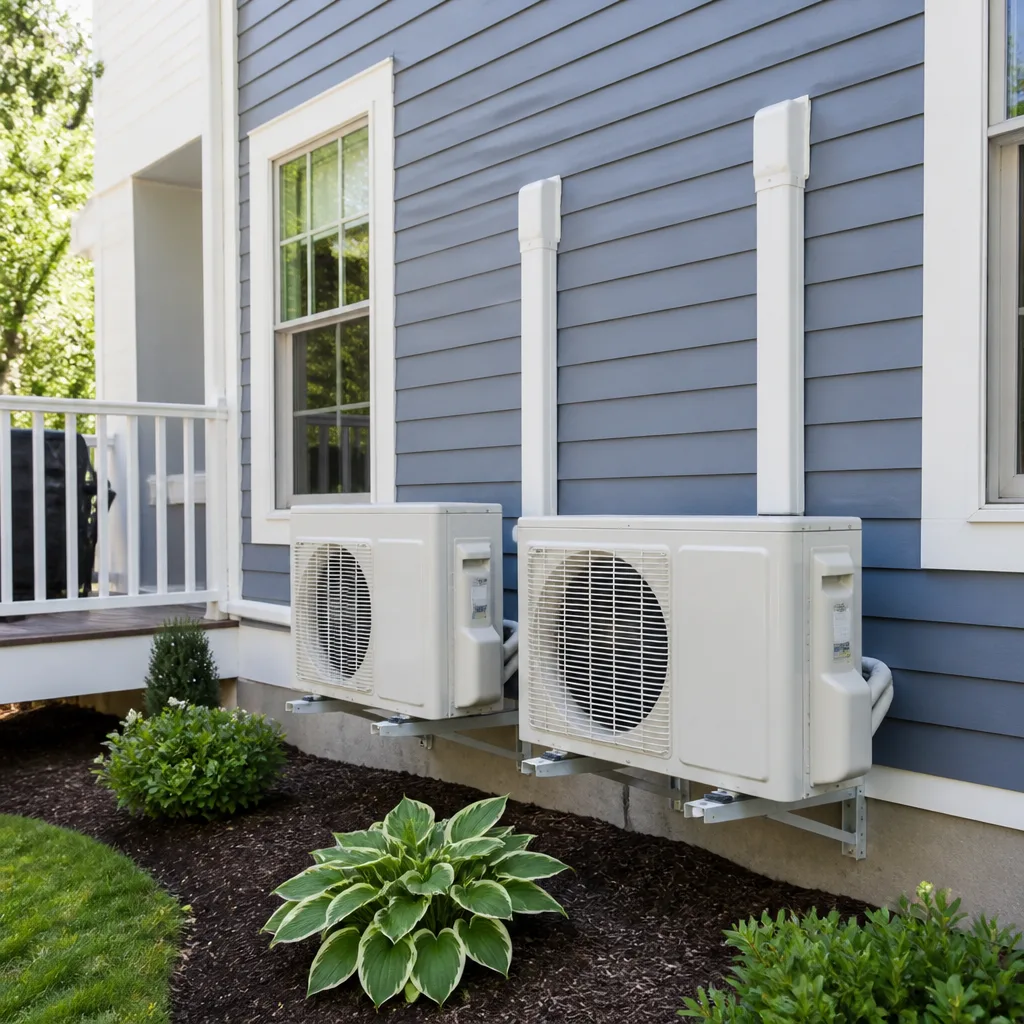 Ductless mini splits
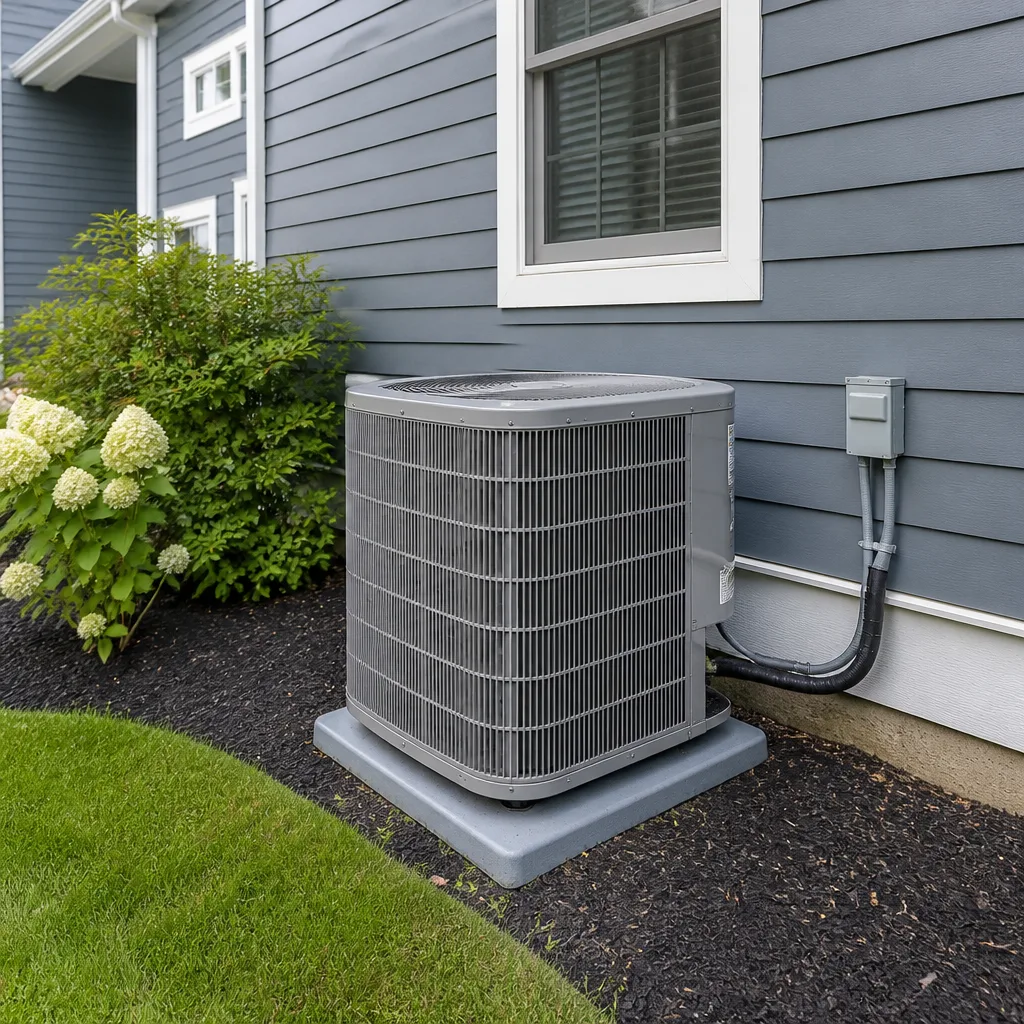 Carrier
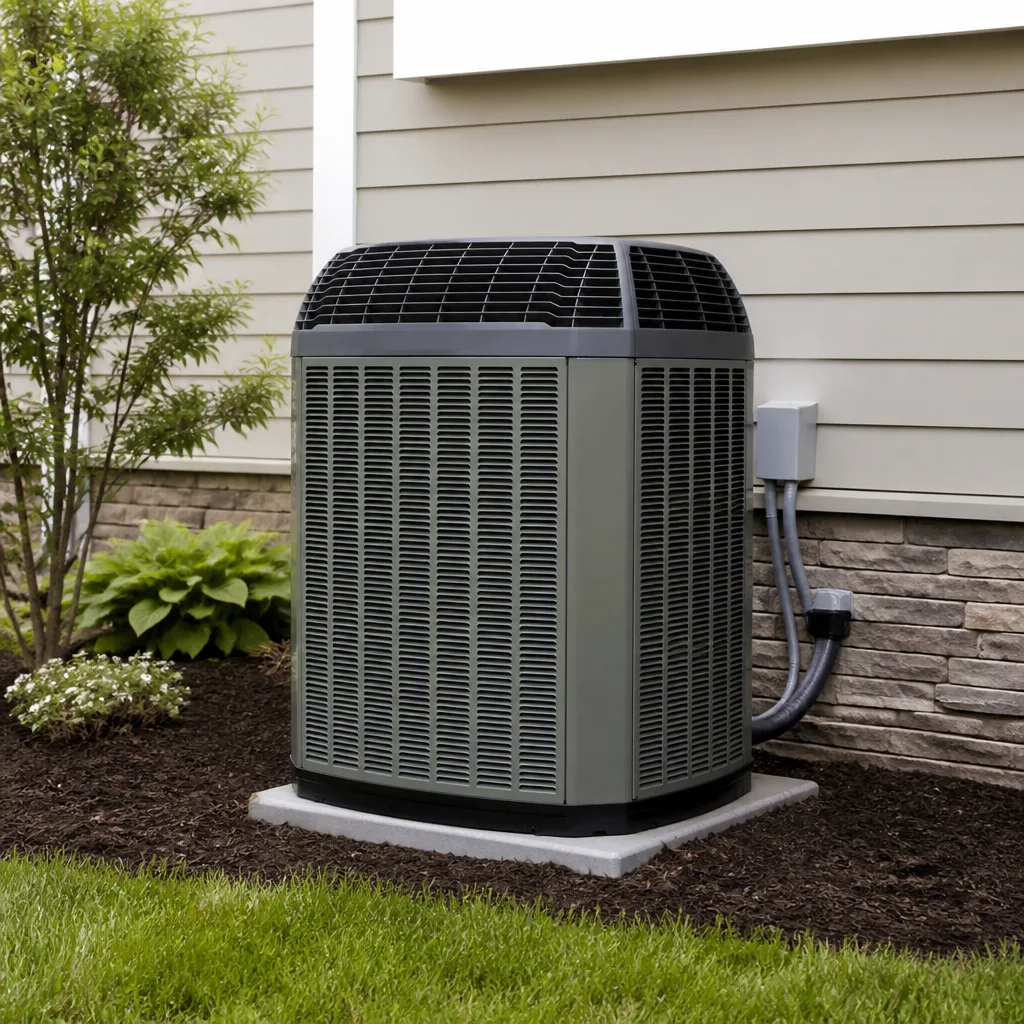 Trane
Trane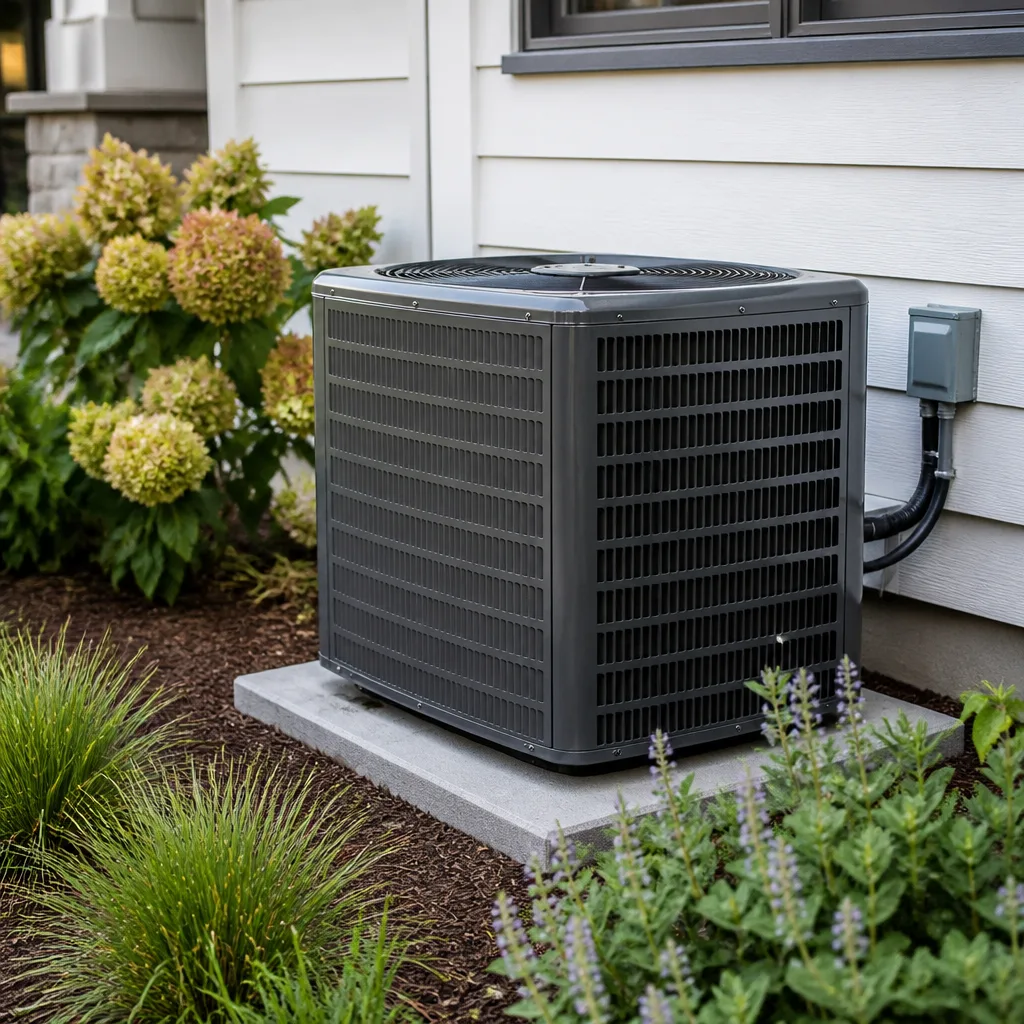 Goodman
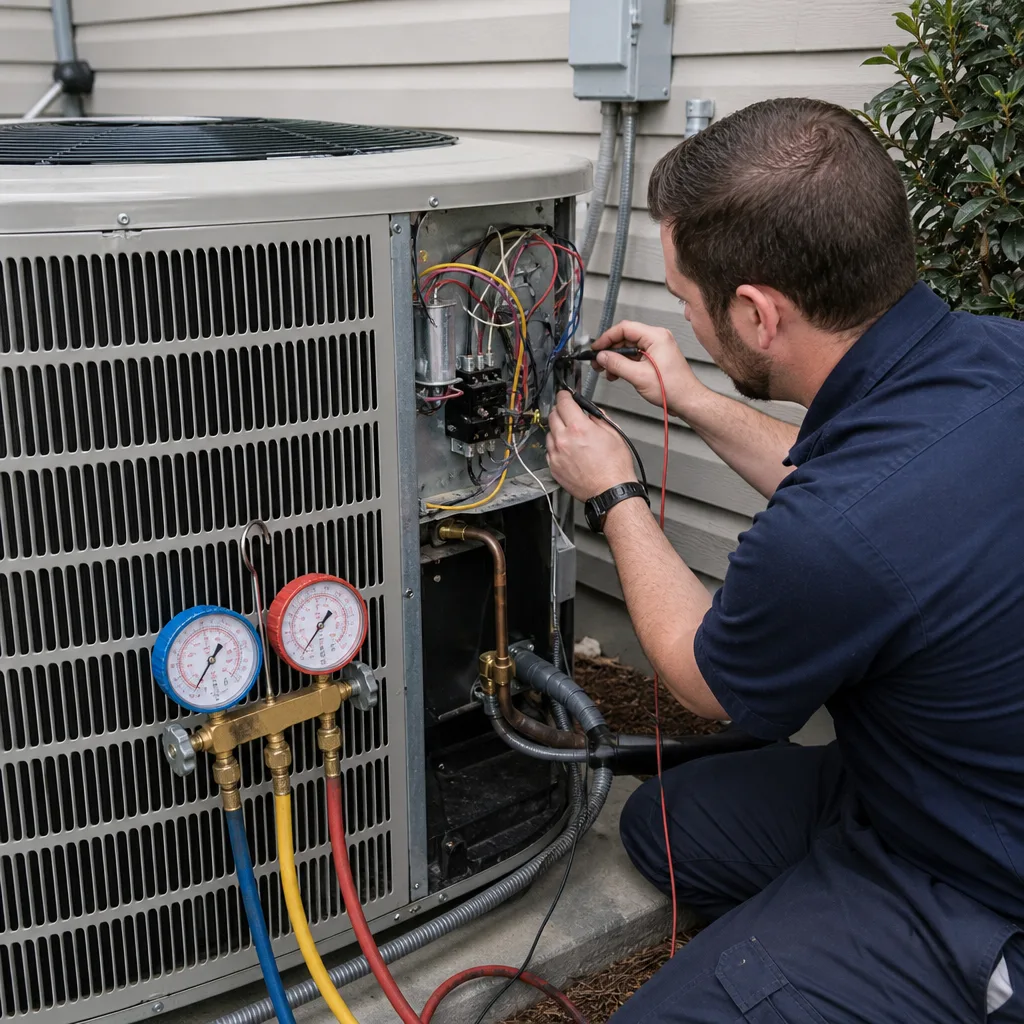
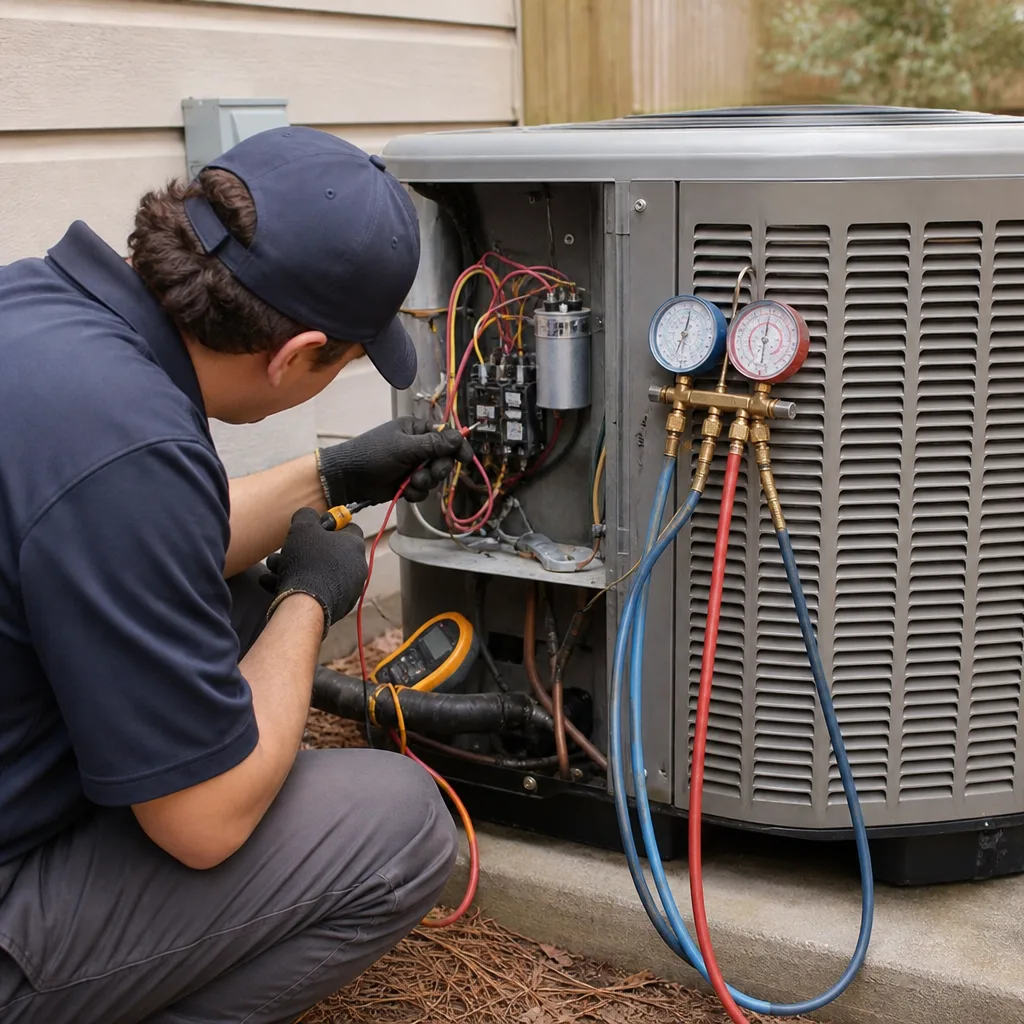
Seasonal tune-up and full diagnostic on your Carrier, Trane, or Goodman system - readings shown to you before any repair is proposed
Diagnosis first, numbers second - you approve the repair price before a single part goes in.
Get your free estimateThe Complete Guide to HVAC in Atlanta
Atlanta sits in ASHRAE Climate Zone 3A, a designation most homeowners never hear about until it costs them money. It means your system has to cool aggressively for eight months of sticky, saturated heat AND handle occasional hard freezes that burst pipes and crack heat exchangers. The advice written for Phoenix or Chicago simply doesn’t apply here, and following it is how people end up with undersized units, mold in their ductwork, and utility bills that climb every July. This guide explains what actually matters for an Atlanta HVAC system: how humidity changes sizing math, what Georgia’s new efficiency rules mean for your next replacement, how long equipment really lasts in our climate, and how to read a load calculation so you know whether a contractor did the work or guessed. We’ll walk through maintenance timing that matches Atlanta’s calendar, not a generic national one, and give you the questions to ask before anyone touches your system.
Quick Answer
An HVAC system in Atlanta needs to be sized for humidity removal first, not just temperature, because our cooling season runs roughly March through October with dew points that stay above 70°F for weeks at a time. Georgia now enforces SEER2 minimums of 14.3 for split-system air conditioners and 15.2 for heat pumps under the 2023 DOE regional standards, so clearance equipment that doesn’t meet those numbers can fail a permit inspection. Expect a correctly sized central AC or heat pump to last 12 to 16 years in Atlanta’s run-time-heavy climate, which is shorter than national averages because our equipment simply logs more hours. The single most important document on any replacement job is a Manual J load calculation done for your specific house, not a rule-of-thumb square footage guess.
Styles & brands we work with
Table of Contents
- Why Atlanta’s Climate Breaks Generic HVAC Advice
- Humidity Is the Real Problem: Latent Load and Sizing Mistakes
- Georgia’s SEER2 Requirements After the 2023 DOE Standard
- Realistic Equipment Lifespan in Atlanta’s Climate
- How to Read a Manual J Load Calculation Report
- Red Clay, Condensate, and Drain Line Maintenance
- Maintenance Timing Built Around Atlanta’s Calendar
- What Works: Brands and Configurations That Fit Atlanta Homes
Why Atlanta’s Climate Breaks Generic HVAC Advice
Most national HVAC guides are written as if the country has two seasons: a hot one and a cold one. Atlanta has neither cleanly. Our cooling season is long and shallow at the edges, with 90°F days possible from April through early October, and our heating season is short but occasionally brutal. The January 2025 freeze that dropped Atlanta to 13°F is the type of event our systems have to survive without complaint. A system sized only for our average temperatures will fail exactly when you need it most, and a system sized only for peak summer will short-cycle through spring and fall, never running long enough to pull moisture out of the air. We’ve seen homes in Buckhead, Decatur, and Sandy Springs with the same square footage need meaningfully different equipment because one sits under mature tree canopy and the other bakes on a cleared lot. Solar gain, window orientation, and attic insulation matter more here than in flatter, more predictable climates. Generic advice ignores all of that.
What Atlanta homeowners actually need is a system matched to a specific house envelope, with a contractor who measures rather than assumes. Our cooling season lasts about seven to eight months, and our heating season is concentrated in December through February. That imbalance means your air conditioner is the primary workhorse of the system, and your furnace is a secondary, cold-snap insurance policy. Any guide that treats heating and cooling as equal partners is written for a different latitude.
Humidity Is the Real Problem: Latent Load and Sizing Mistakes
Atlanta’s summer temperatures are high, but they’re not the whole story. The dew point, which is the temperature at which air becomes saturated and can’t hold any more moisture, regularly sits in the low 70s from June through September. That means the air is already carrying a huge amount of water before your AC ever touches it. An air conditioner does two jobs: it lowers temperature (sensible load) and removes humidity (latent load). In Atlanta, the latent load is disproportionately large, and ignoring it is the most common sizing mistake we see from contractors who learned the trade in drier climates or who never bothered to learn the math at all.
Here’s what happens when a system is oversized, which is the usual result of square-footage guessing: the compressor kicks on, cools the air to the thermostat setpoint in eight or ten minutes, and shuts off. That’s enough time to drop the temperature but nowhere near enough time to condense and drain moisture off the coil. The result is a house that reads 72°F on the thermostat and feels clammy at best, with humidity levels in the 65% to 70% range at worst. That’s the range where dust mites thrive, mold can begin forming on cool surfaces, and wood floors and cabinetry start to swell. An undersized system has the opposite problem: it runs constantly and can’t keep up on a 95°F August afternoon, but it does remove humidity well because it’s running long cycles. The sweet spot is a system that runs long enough to dehumidify, cycles off occasionally, and still holds temperature on the hottest design day Atlanta actually experiences.
We also see plenty of Atlanta homes with two-story layouts where a single system serves both floors. Upstairs bedrooms in Colonial and Craftsman-style houses routinely run 6 to 8 degrees warmer than the main floor in summer because heat rises and single-zone ductwork distributes unevenly. A proper fix involves either zoning with dampers or a variable-speed system that can modulate output to match load in real time. Neither is a simple swap, and both require actual measurement to design correctly.
Georgia’s SEER2 Requirements After the 2023 DOE Standard
On January 1, 2023, the Department of Energy’s new efficiency standards took effect, and they changed the equipment landscape in Georgia permanently. The old SEER rating was replaced by SEER2, which measures efficiency under more realistic testing conditions with higher static pressure. The important number for Atlanta homeowners is the regional minimum. Georgia is in the Southeast region, which requires a minimum of 14.3 SEER2 for split-system air conditioners (the classic outdoor condenser plus indoor coil configuration) and 15.2 SEER2 for heat pumps. Window units and packaged systems have different, lower minimums, but those are less common in single-family Atlanta homes.
The practical consequence is that last year’s clearance equipment, which a lot of contractors stockpiled before the standard changed, can fail a permit inspection in 2025 and beyond. A 13 SEER condenser that was legal to install in 2022 is no longer legal to install in Atlanta, and the inspection process in Fulton and DeKalb counties does check equipment ratings against the new standard. If a contractor offers you a deal on “new old stock” equipment, verify the SEER2 rating on the AHRI certificate before signing anything. The AHRI Directory of Certified Product Performance is the authoritative database, and every legitimate equipment matchup has a certificate number you can look up. If there’s no AHRI reference number on the quote, ask for one. If the contractor can’t produce it, walk.
There’s a nuance worth understanding here. Higher SEER2 numbers do mean lower operating costs, but they’re not a free lunch. The additional efficiency comes from more sophisticated equipment: variable-speed compressors, communicating thermostats, more complex control boards. That equipment costs more up front and more to repair when it breaks. In Atlanta’s climate, where your AC runs hundreds of hours per season, a jump from the 14.3 SEER2 minimum to a 17 or 18 SEER2 system can pay back in a reasonable timeframe for a house you’ll stay in long-term. For a house you’re selling in three years, the minimum-efficiency, properly sized system is the better financial decision. The honest answer depends on your horizon, not on a commission structure.
Realistic Equipment Lifespan in Atlanta’s Climate
Manufacturers quote equipment lifespans of 15 to 20 years for air conditioners and heat pumps, but those numbers assume average national run times. Atlanta is not average. Our cooling season stretches across seven or eight months, and that means our compressors, contactors, capacitors, and fan motors simply accumulate hours faster than identical equipment in, say, Indianapolis or Denver. In our experience across thousands of Atlanta service calls, a correctly sized, regularly maintained central air conditioner in a single-family home here lasts 12 to 16 years. A heat pump, which runs year-round because it provides both heating and cooling, tends to land on the shorter end of that range, usually 10 to 14 years. A furnace in Atlanta lasts considerably longer than a furnace in Minnesota, often 20 years or more, because it only fires during our relatively short heating season.
What kills Atlanta equipment early is not the hours alone. It’s the combination of long run times, high humidity accelerating corrosion on coils and fins, and deferred maintenance. A condenser coil that’s never been cleaned is working against a layer of dirt, pollen, and red clay dust that acts as an insulating blanket, raising head pressure and forcing the compressor to work harder. Atlanta’s pollen seasons, which are famously intense in March and April, are not kind to outdoor units. The coil on a condenser sitting under a pine tree in the northern suburbs will foul faster than one on a flat, open lot in Midtown. Maintenance timing matters, and we’ll get to that in a later section.
When a system reaches the 12-year mark in Atlanta, it’s time to start paying attention to repair economics. A compressor replacement on an aging system often costs 40% to 60% of a new system’s price, and you’re bolting a new heart into a machine with an old body. Our advice is straightforward: if a repair on a 12-plus-year-old Atlanta system costs more than about half the price of a replacement and the system has had more than two significant repairs in the past three years, the replacement conversation is the honest one to have. We’ll give you that conversation in writing, with numbers, before any work starts.
How to Read a Manual J Load Calculation Report
Manual J is the industry-standard method for calculating the heating and cooling load a specific house requires. It’s published by the Air Conditioning Contractors of America (ACCA), and it takes into account the house’s square footage, ceiling heights, window types and orientations, insulation levels in walls and attic, air leakage rates, number of occupants, and dozens of other variables. A proper Manual J for an Atlanta home produces a cooling load number in BTUs per hour and a separate heating load number. If a contractor quotes you a system based on “500 square feet per ton” or any other rule of thumb, they did not do a load calculation, and they cannot know whether the equipment they’re selling is the right size.
Here’s how to verify a Manual J was actually done and interpreted correctly:
- Ask for the report. A contractor who did the calculation will give you the output sheet. It will show the house’s design conditions, the individual room-by-room loads, and the total cooling and heating loads in BTUs. If the contractor says “it’s in the truck” or “I’ll send it later” and never does, that’s an answer.
- Check the design temperatures. For Atlanta, the outdoor summer design temperature used in Manual J is typically 92°F to 94°F, and the winter design temperature is typically 23°F to 25°F. If the report uses 80°F or 40°F, it’s not calibrated to our climate, and the resulting load will be wrong.
- Look at the sensible vs. latent split. The report should show two components of the cooling load: sensible (temperature) and latent (humidity). In Atlanta, the latent load typically represents 25% to 35% of the total cooling load. If the latent number is suspiciously low, the calculation may not account for our humidity properly, and the system will under-dehumidify.
- Compare the equipment sizing to the load. The selected AC or heat pump should have a capacity that equals or slightly exceeds the calculated load, ideally within about 10% to 15% oversize. More than that, and you’re back into short-cycling and under-dehumidification territory.
- Ask about the duct design. Manual J calculates load, but Manual D calculates duct sizing. A load calculation is only half the job. If the existing ductwork can’t move the right amount of air to each room, the correctly sized equipment will still underperform. In Atlanta’s older neighborhoods, including many homes built in the 1950s through 1970s, duct systems are frequently undersized or leaky.
A real Manual J takes an hour or more to complete on site, with measurements in every room, window sizes, insulation inspections in the attic, and often a blower door test to measure air leakage. It’s not a five-minute walkthrough. If you’re shopping for AC Installation in Atlanta, the load calculation is the single most important thing to verify before signing a contract, because it determines whether the system will be comfortable and efficient for its entire life, or whether it will be wrong from day one.
Red Clay, Condensate, and Drain Line Maintenance
Atlanta’s soil is a distinctive red clay that’s rich in iron oxide, dense, and slow to drain. It’s also the reason so many of our condensate lines clog. Here’s the connection: your air conditioner removes gallons of water from the air every day in summer. That water drips off the evaporator coil, collects in a drain pan, and flows by gravity through a narrow PVC pipe, usually to a floor drain, a utility sink, or outdoors. In Atlanta’s climate, that drain line stays wet and dark for months at a time, which is perfect breeding ground for algae, mold, and bacteria. The resulting sludge builds up on pipe walls, and eventually the line clogs. When the drain clogs, the water backs up into the drain pan, and if the safety float switch fails or isn’t installed, it overflows into the ceiling, the wall, or the floor. We’ve seen thousands of dollars in ceiling damage in Atlanta homes from a $10 PVC line that never got cleaned.
The red clay connection is indirect but real. Outdoor condensate lines that run along foundation walls or through crawl spaces are exposed to soil moisture and clay dust. As the clay expands and contracts with rain and drought, it can shift the pipe, creating low spots where water pools and debris accumulates. Houses built on Atlanta’s clay-rich soils are also more prone to foundation settling, which can throw off the pitch of a condensate drain line over time. A line that once sloped correctly can end up nearly flat, and standing water in a flat section is exactly where the clog starts.
Maintenance for an Atlanta condensate line should be more frequent than the national “once a year” advice. We recommend cleaning the line every six months, once in late spring before the peak cooling season and once in early fall after it. A simple wet-dry vac on the outdoor drain termination, followed by pouring a cup of white vinegar down the line to kill organic growth, is a reasonable homeowner task that doesn’t involve any dangerous components. But if you’re not comfortable doing it, or if the line is in an awkward crawl space, this is a job to hand to a technician. For homes with a history of recurring clogs, installing an overflow switch and an accessible cleanout fitting is a worthwhile upgrade. Our AC Repair in Atlanta service routinely finds that what looked like a refrigerant or compressor problem was actually a backed-up condensate line tripping the safety float switch.
Maintenance Timing Built Around Atlanta’s Calendar
A generic maintenance guide tells you to “service your HVAC twice a year.” That’s directionally correct but misses the timing that matters in Atlanta specifically. Here’s the schedule that works for our climate, and the reasoning behind each step:
- Late February or early March: cooling system tune-up. Atlanta’s pollen season begins in earnest in March, and the first 85°F day usually arrives by April. Getting the AC checked before pollen blankets the outdoor coil means the technician can clean the coil, check the refrigerant (the cooling fluid your AC needs to run), test capacitors and contactors, and verify the system is cooling efficiently before the load arrives. A system that starts the cooling season clean runs more efficiently all summer.
- Mid-March to early April: pollen inspection. This isn’t a separate service call on top of the tune-up, but it’s worth knowing what’s happening. Pine pollen and oak pollen are the heavy hitters in Atlanta, and they will coat a condenser coil in a matter of weeks. If your outdoor unit sits under or near pine trees, it needs an additional coil rinse after pollen season, typically in late April or early May. A garden hose with a gentle spray, used from the outside inward, is sufficient for a homeowner who’s comfortable with it. Turn the unit off at the breaker first.
- Late September or early October: heating system check. By late September, Atlanta’s evenings are cool enough that the AC is cycling off, and the first serious cold snap is usually six to eight weeks away. This is the time to have the furnace inspected, including the heat exchanger, the burners, the ignition system, and the flue. A cracked heat exchanger is a carbon monoxide hazard, and while it’s rare in a maintained system, the consequences of missing it are severe. If you have a gas furnace, verify your carbon monoxide detectors are working during this window.
- October through November: drain line and filter check. The cooling season is over, and the condensate line has been working for six months straight. A final cleaning here prevents a summer’s worth of sludge from hardening over the winter and becoming a harder clog next spring.
- December through February: cold snap readiness. Atlanta’s really cold weather is unpredictable, but it does arrive. Before a forecast freeze, check that your furnace filter is clean, your thermostat is working properly, and your outdoor unit (if it’s a heat pump) is free of leaves, ice buildup, or debris. An outdoor heat pump that’s encased in ice during an Atlanta freeze event was either not defrosting properly or was blocked by leaves and debris.
If you’re looking at the whole calendar at once, the key insight is that Atlanta’s HVAC maintenance is front-loaded toward the cooling season because that’s where the hours pile up. A furnace in Atlanta is the backup generator; the AC is the engine that runs all year long. Treat it accordingly.
What Works: Brands and Configurations That Fit Atlanta Homes
We’re trained to service nine major residential HVAC brands, including Carrier, Trane, Lennox, Goodman, Rheem, York, Daikin, Bryant, and American Standard, and the honest truth is that the brand matters less than the installation. A mid-range Trane installed with a proper Manual J match, a clean duct system, and a tight refrigerant circuit will outperform a top-of-the-line Carrier slapped into the same house with no measurements and a sloppy vacuum job. The equipment is a box; the installation is what makes it work.
That said, some configurations do fit Atlanta’s specific needs better than others. For homes with high humidity concerns, which is most of Atlanta, a two-stage or variable-speed compressor is worth serious consideration. These systems run at lower capacity on mild days, which keeps air moving across the coil longer and removes more moisture per cycle. A variable-speed air handler, which ramps the blower up and down rather than running at one fixed speed, does the same thing. In our climate, these aren’t luxury features; they’re dehumidification tools. On the heating side, Atlanta’s short winters mean a standard 80% AFUE furnace is perfectly adequate for most homes, and a 90%-plus condensing furnace is rarely a good financial investment here because the heating season is too short to recover the up-front cost difference. A heat pump is a different calculus: because it provides both heating and cooling, and because Atlanta’s winters are mild enough for heat pumps to operate efficiently most days, a heat pump can be an excellent fit for many Atlanta homes, especially those without natural gas service.
If you’re comparing quotes, ask every contractor the same three questions: What SEER2 rating is this system, and does it meet Georgia’s current minimum? What Manual J cooling and heating loads did you calculate for my house, and how does this system’s capacity compare? And what’s the AHRI reference number for this particular equipment matchup? A contractor who answers all three with specific numbers and documentation is doing the job correctly. A contractor who answers with “it’s the right size for a house like yours” is guessing. When you’re looking at Furnace Repair in Atlanta versus replacement, the same documentation applies.
Common Mistakes to Avoid
- Buying by brand name alone. The best equipment in the world can’t overcome a sloppy installation, and the brand wars are mostly marketing. In Atlanta’s humidity, a properly installed mid-range system comfortably outperforms a premium system that was guessed into place.
- Trusting a square-footage quote. “We’ll put you in a 3.5-ton because your house is 2,200 square feet” is the oldest shortcut in the industry, and in Atlanta it produces short-cycling, under-dehumidified houses. A real Manual J is the only way to know.
- Skipping the AHRI check. Clearance equipment that doesn’t meet Georgia’s SEER2 minimums is still being sold in some cases, and it will fail a permit inspection. Check the certificate number before you sign.
- Ignoring the condensate line. A clogged drain line causes more water damage in Atlanta homes than any other HVAC issue, and it’s almost entirely preventable with twice-yearly cleanings. If your line has a history of clogs, get an overflow switch installed.
- Waiting for a failure to plan a replacement. The worst time to replace an HVAC system is when it fails on a 96°F July afternoon and you have to make a fast decision. If your system is 12-plus years old and showing fatigue, get the replacement quote before the emergency, not during it.
- Deferring maintenance on a system that’s still “working fine.” Most Atlanta HVAC failures are preceded by months of declining performance: longer run times, weak airflow, a slight refrigerant undercharge, a capacitor that’s losing capacitance. A tune-up catches these early and is dramatically cheaper than an emergency repair.
See the difference
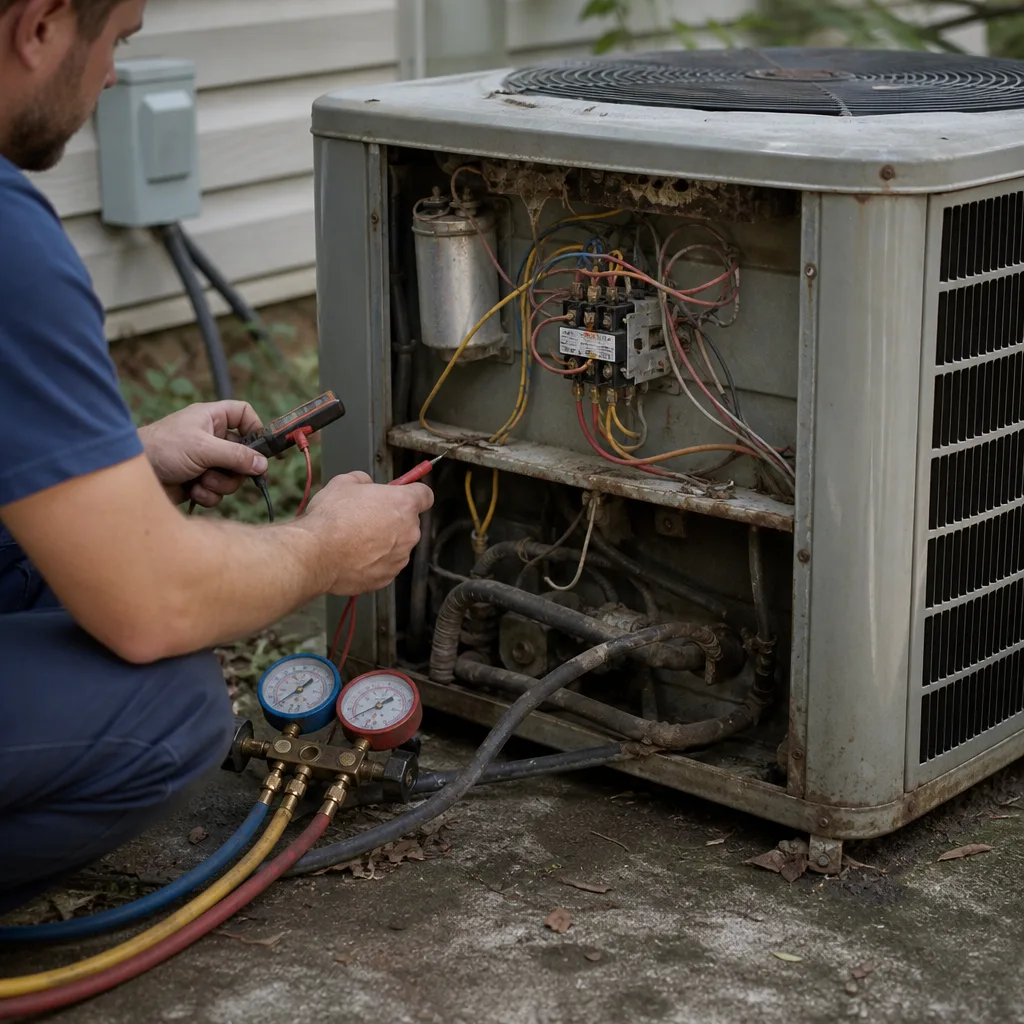 Before
 After
After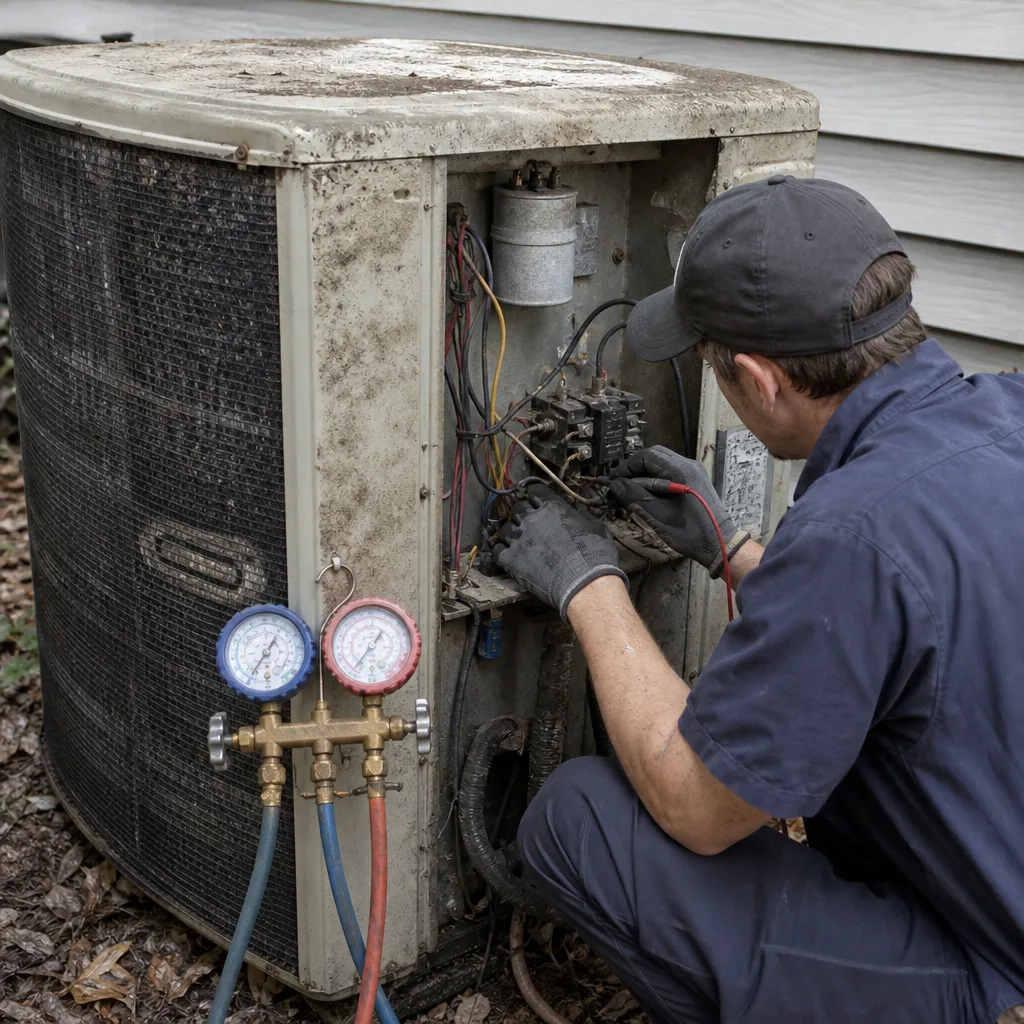 Before
 After
After Before
 After
AfterWhen to Call a Professional
Some HVAC tasks are routine homeowner maintenance, but the genuinely dangerous work should never be attempted without training. If your system involves refrigerant handling, that requires EPA Section 608 certification, and opening the sealed refrigerant circuit without the right equipment and training is both illegal and dangerous. Electrical work inside the air handler or condenser, including capacitor replacement, carries a lethal shock risk even with the breaker off, because capacitors store charge. Any repair involving gas lines, heat exchangers, or combustion venting on a furnace carries carbon monoxide risk if done incorrectly. And anything on a steep roof, including roof-mounted package units, is a fall hazard that should be left to professionals with proper safety equipment.
For everything else, the rule is simple: if you’ve checked the filter, cleared the outdoor unit, confirmed the thermostat is set correctly, and the system still isn’t cooling or heating properly, the next step is a professional diagnosis. Cold Harbour Heating and Air Atlanta offers free estimates in Atlanta, and a real person answers the phone around the clock. Call (478) 223-8776 and we’ll give you a written price before any work begins, with the guarantee in writing before the technician leaves. For a full rundown of what a repair visit includes, our AC Repair in Atlanta page walks through the process step by step.
Frequently Asked Questions
Service your cooling system in late February or early March before pollen season peaks, and your heating system in late September or early October before the first cold snap. Atlanta’s long cooling season means the AC does most of the work, so a spring tune-up is non-negotiable here. Call (478) 223-8776 to schedule a tune-up at a flat price with a written report of what we found.
A complete system replacement in Atlanta typically runs $7,500 to $14,000 for a mid-range split-system AC and furnace, with high-efficiency heat pumps and variable-speed systems running higher. The final number depends on the Manual J load calculation, the equipment’s SEER2 rating, and the condition of your existing ductwork. We give every homeowner a written price before any work starts, so there are no surprises at the door.
Yes, a heat pump is an excellent choice for most Atlanta homes because our winters are mild enough for heat pumps to operate efficiently on all but the coldest days, and they provide both heating and cooling in one unit. In a January freeze, a properly sized heat pump with electric resistance backup will still hold comfortable temperatures. If your home has natural gas service, a dual-fuel setup is also worth considering.
Your system is likely oversized, which means it cools the air so quickly that the compressor shuts off before the coil has time to condense and drain moisture. In Atlanta’s climate, this is the most common comfort complaint we hear. A correctly sized system, often with a two-stage or variable-speed compressor, runs longer cycles and removes dramatically more humidity per hour.
Yes, HVAC replacement in Atlanta requires a mechanical permit, and the inspection checks that the installed equipment meets Georgia’s current SEER2 minimums (14.3 for split-system ACs, 15.2 for heat pumps) and that the installation follows code. A licensed contractor handles the permit paperwork and schedules the inspection. If a contractor suggests skipping the permit to save money, that’s a red flag.
A straightforward AC and furnace replacement in Atlanta typically takes one full day, sometimes stretching to a day and a half if the home has two systems, an awkward crawl space, or significant duct modifications. The estimator’s job is to walk the site before installation day so the crew knows exactly what they’re walking into, and we never promise a same-day installation for new equipment. The work is measured, ordered, and scheduled with a firm arrival window and a written price. For details on what’s included, our AC Installation in Atlanta page covers the process from estimate to final inspection.
The Bottom Line
An HVAC system in Atlanta is a dehumidifier first and a temperature machine second, and every decision you make about equipment, sizing, maintenance, and replacement should flow from that reality. Buy a system matched to your house through a real Manual J load calculation, not a square-footage guess. Verify that the equipment meets Georgia’s current SEER2 minimums and has an AHRI certificate to prove it. Service the system on Atlanta’s calendar, with cooling maintenance before pollen season and heating maintenance before the first freeze. And when something does go wrong, call a company that picks up the phone, shows up in the window it promised, puts the price and the guarantee in writing, and comes back for free if the repair fails inside 365 days. That’s exactly how Cold Harbour Heating and Air Atlanta home operates, and it’s why we’ve been serving Atlanta homeowners since 2003.
Written by Victor Mancini, Owner at Cold Harbour Heating and Air Atlanta, serving Atlanta since 2003.