
 AC repair
 Furnace & heating
 Heat pumps
 Ductless mini splits
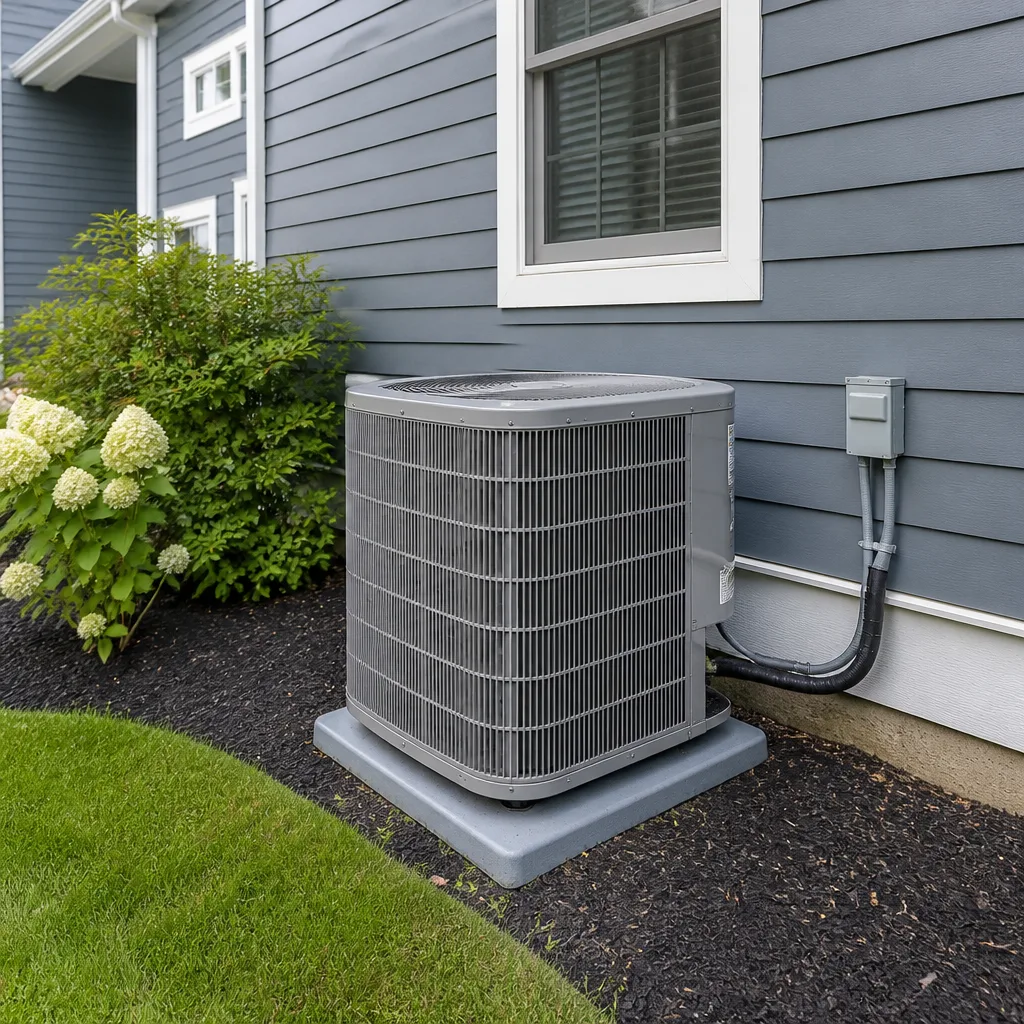 Carrier
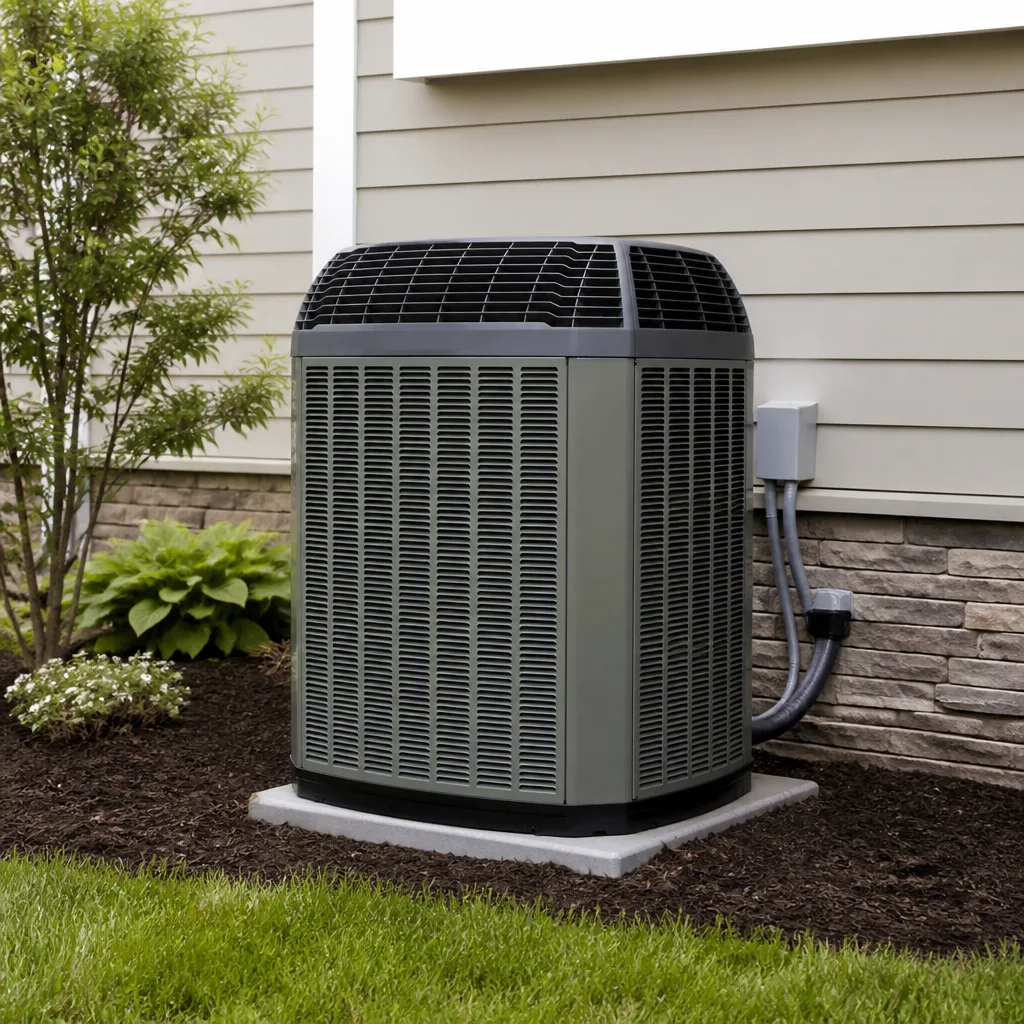 Trane
Trane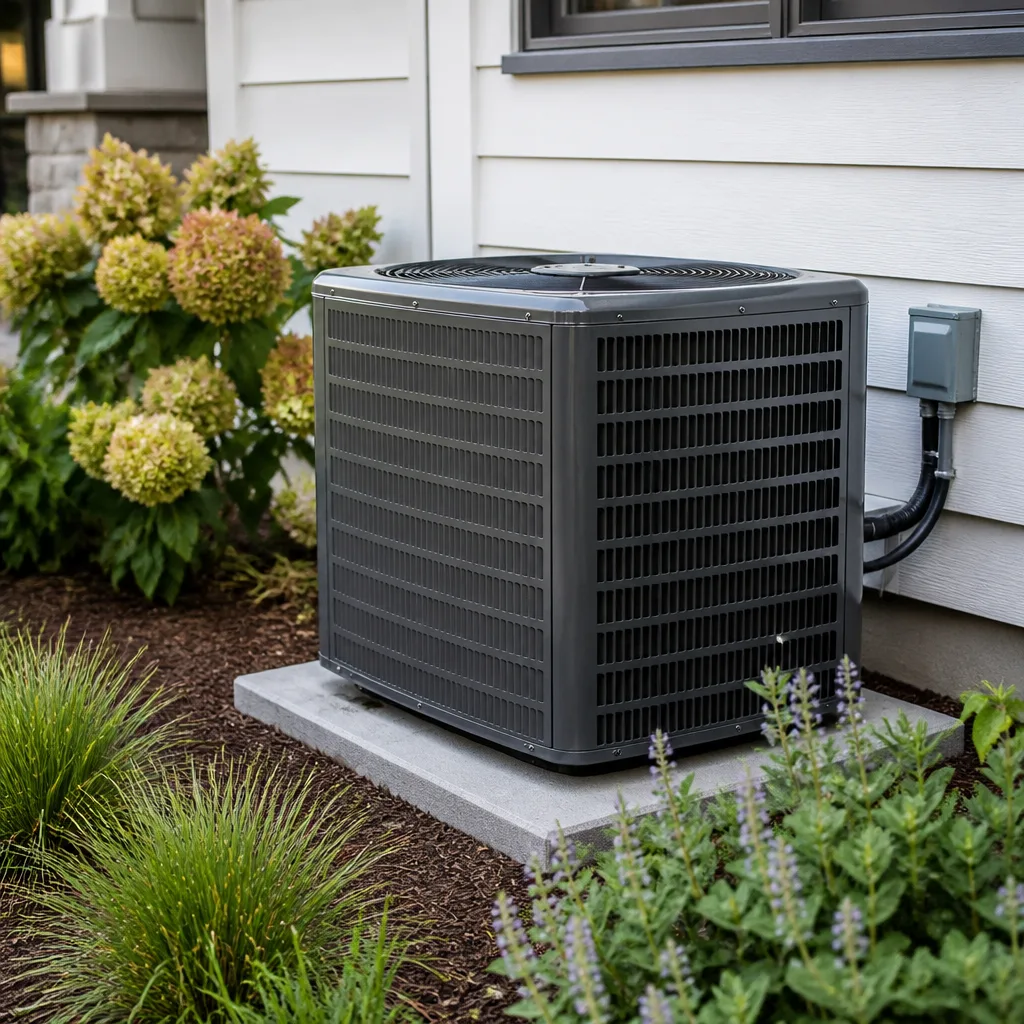 Goodman
Seasonal tune-up and full diagnostic on your Carrier, Trane, or Goodman system - readings shown to you before any repair is proposed
Diagnosis first, numbers second - you approve the repair price before a single part goes in.
Get your free estimateYork Ductwork Repair: The Atlanta Owner’s Guide
York ductwork repair in Atlanta typically runs $150 – $650 depending on what’s failed, and we stock the common York-compatible duct fittings, collars, and flex sections on our trucks so most jobs are done in a single visit. Ductwork isn’t a York-branded part in the way a control board or blower motor is, but the duct system connected to your York air handler or furnace has to match its airflow specs, and getting that wrong shows up as hot rooms, frozen coils, and a utility bill that climbs for no good reason.
Most Atlanta homeowners discover their ductwork needs repair one of two ways: a room that won’t cool in August no matter how low you set the thermostat, or a utility bill that jumped 30% and stayed there. Sometimes it’s quieter than that. In older homes around Decatur, Kirkwood, and East Atlanta, we regularly find ducts that have been leaking for years, and the homeowner just assumed the system was “always like that.” It wasn’t. It’s a fixable problem, and once the ducts are sealed and balanced, the difference is immediate.
Here’s the honest version: if your York system is running but your home isn’t comfortable, the ductwork is the first place we look, because it’s the cheapest thing to fix and the most common thing to be wrong. Victor Mancini and the crew at Cold Harbour Heating and Air Atlanta have been chasing down leaks, crushed runs, and badly hung flex duct across metro Atlanta for years, and we lay out the price before any tool comes out. That’s how we work.
Which York Models This Applies To
Ductwork repair applies to every residential York system, because the ducts aren’t tied to a specific model the way a capacitor or pressure switch is. What matters is the size and configuration of your York air handler or furnace, the tonnage of your condenser, and the static pressure your blower is designed to push against. In plain English: your York system was built to move a specific amount of air through a specific amount of resistance, and when ducts leak, collapse, or get pinched, that math stops working.
The York residential lines we see most often in Atlanta homes are the Affinity, LX, and entry-level Coleman-branded units that share a lot of York engineering. An Affinity variable-speed air handler is far less forgiving of undersized or leaking ducts than an older single-stage unit, because it’s constantly modulating airflow and the system notices restrictions quickly. If you’re not sure which York model you have, look for the data plate on the front of the air handler or furnace cabinet, usually on the inside edge of the door. That plate lists the model number, and we can tell you exactly what airflow your system expects.
One compatibility gotcha we see in Atlanta: homes that originally had a straight-cool York system and later added a heat pump or a larger condenser often never had their ducts resized. The old ductwork worked fine for the original load, but the new system needs to move more air, and the ductwork becomes the bottleneck. That’s not a York defect. It’s an installation mismatch, and it’s common in 1970s and 1980s homes across Atlanta that have been through multiple system swaps.
On the OEM-versus-aftermarket question: York doesn’t manufacture flex duct, collars, or boots. Those come from the same manufacturers that supply every HVAC brand in the country. What matters is the spec, not the label. We use R-8 insulated flex and 26-gauge ASTM-rated hard pipe in attics and crawlspaces, which meets and typically exceeds what was there at original installation. If your York system is under warranty, the ducts are almost never covered, so there’s no reason to pay a premium for a York sticker on a part York never made.
Styles & brands we work with
Signs Your York Ductwork Repair Is Failing
- One or two rooms are always 5 – 10 degrees off from the rest of the house. That’s the classic sign of a disconnected or collapsed branch run. Somewhere between the trunk line and that room’s register, air is dumping into the attic or crawlspace instead of the room.
- Dust accumulates on surfaces within days of cleaning. A leak on the return side of your York system pulls in attic air, insulation fibers, and dust, then blows it through every room. Return leaks are also why some Atlanta homes get musty or “itchy” air in the summer.
- You can hear air moving, but barely feel it at the vent. When a run is crushed or kinked, typically by a cable installer or a previous homeowner stepping on flex in the attic, you hear the blower working against the restriction but get almost no airflow at the register.
- Your energy bill is up and the system runs longer to hold temperature. Leaky ducts can waste 20 – 30% of the air your York system produces. In Atlanta’s summer, that’s the difference between a 15-minute cycle and a 40-minute cycle, every hour, all afternoon.
- The attic smells mildewy in summer, or you see condensation on the outside of a duct boot. When cold supply air leaks into a hot, humid attic, condensation forms on the outside of the duct and around the boot. That moisture soaks insulation and, left long enough, rots drywall and grows mold on the ceiling below.
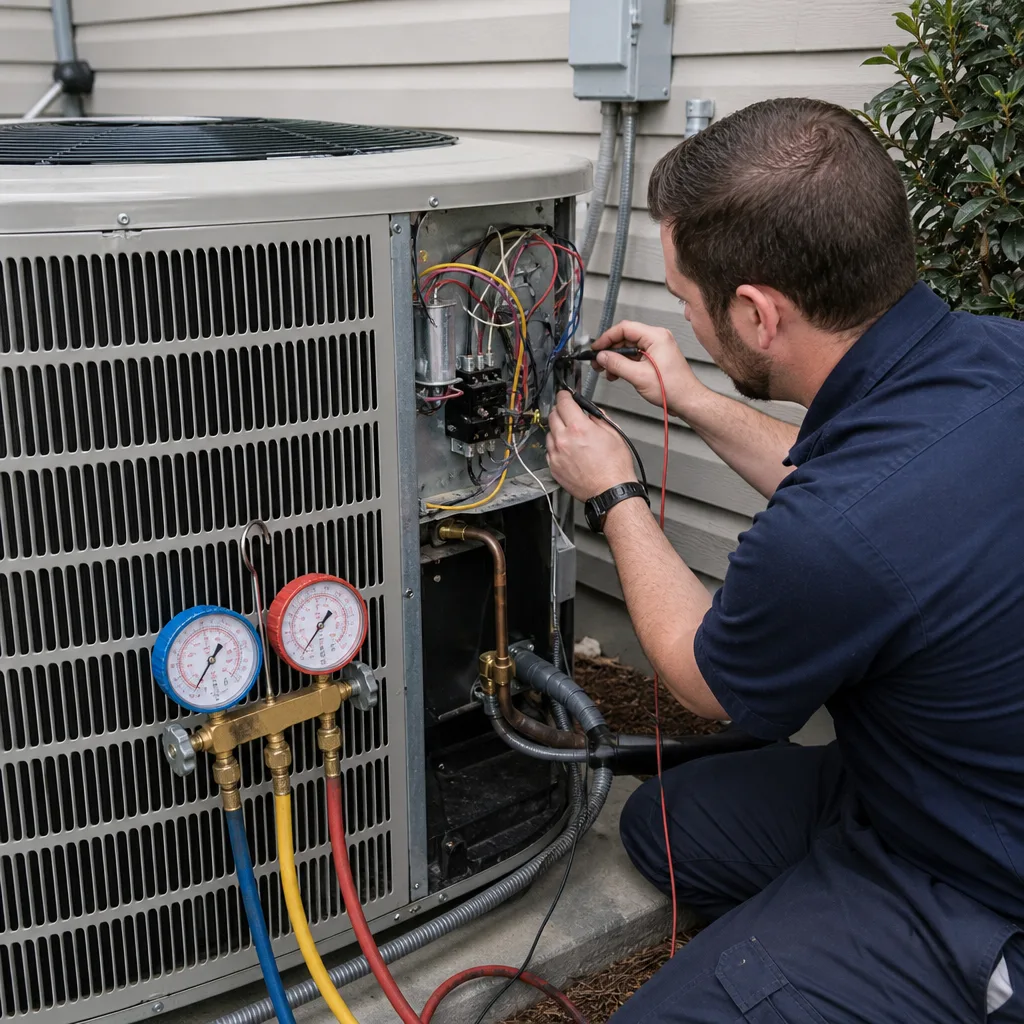
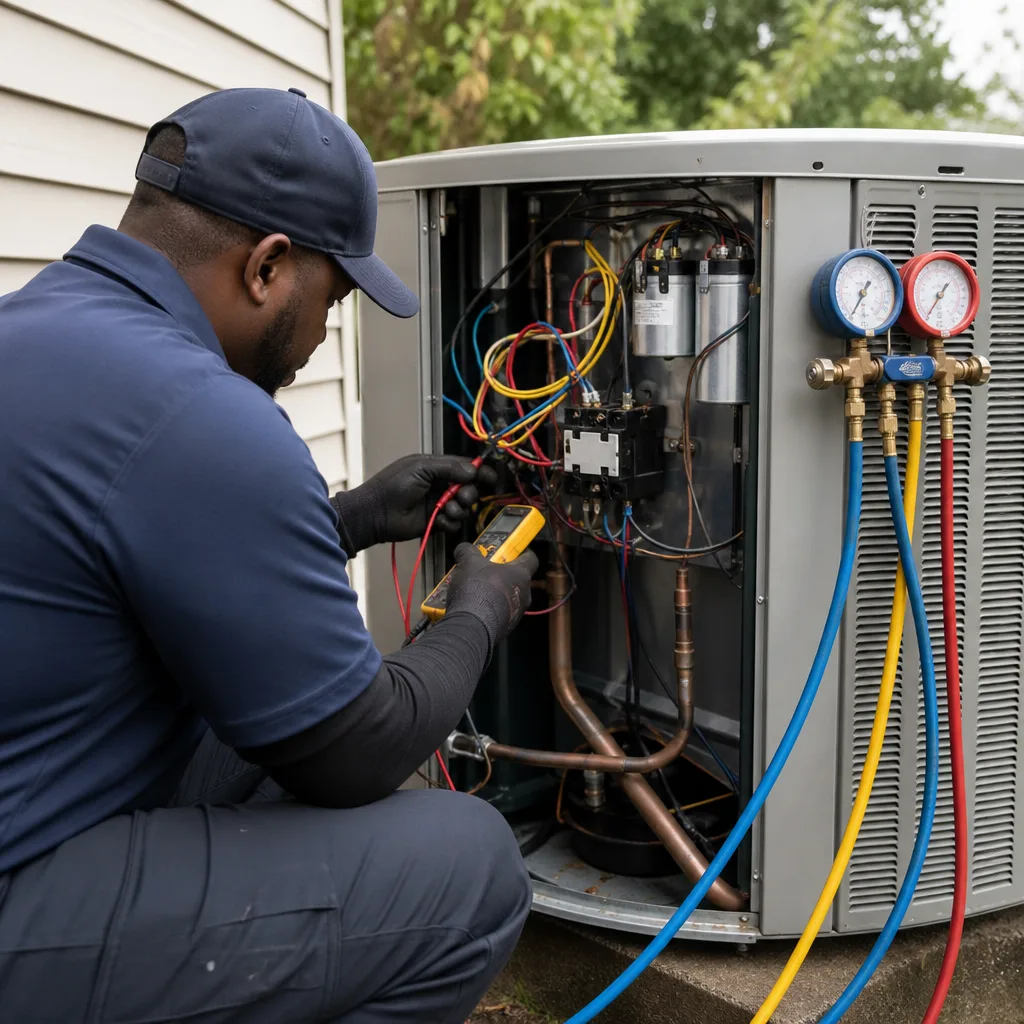
See the difference
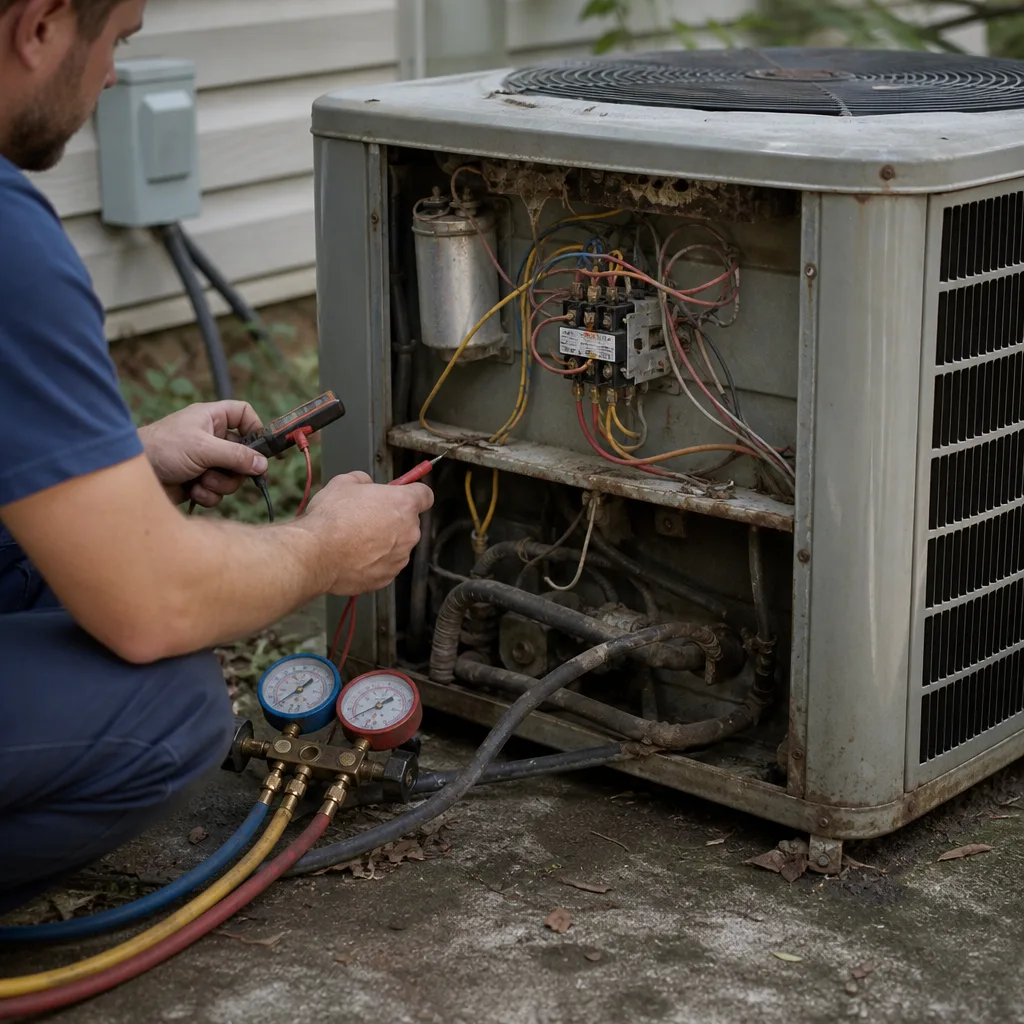 Before
 After
After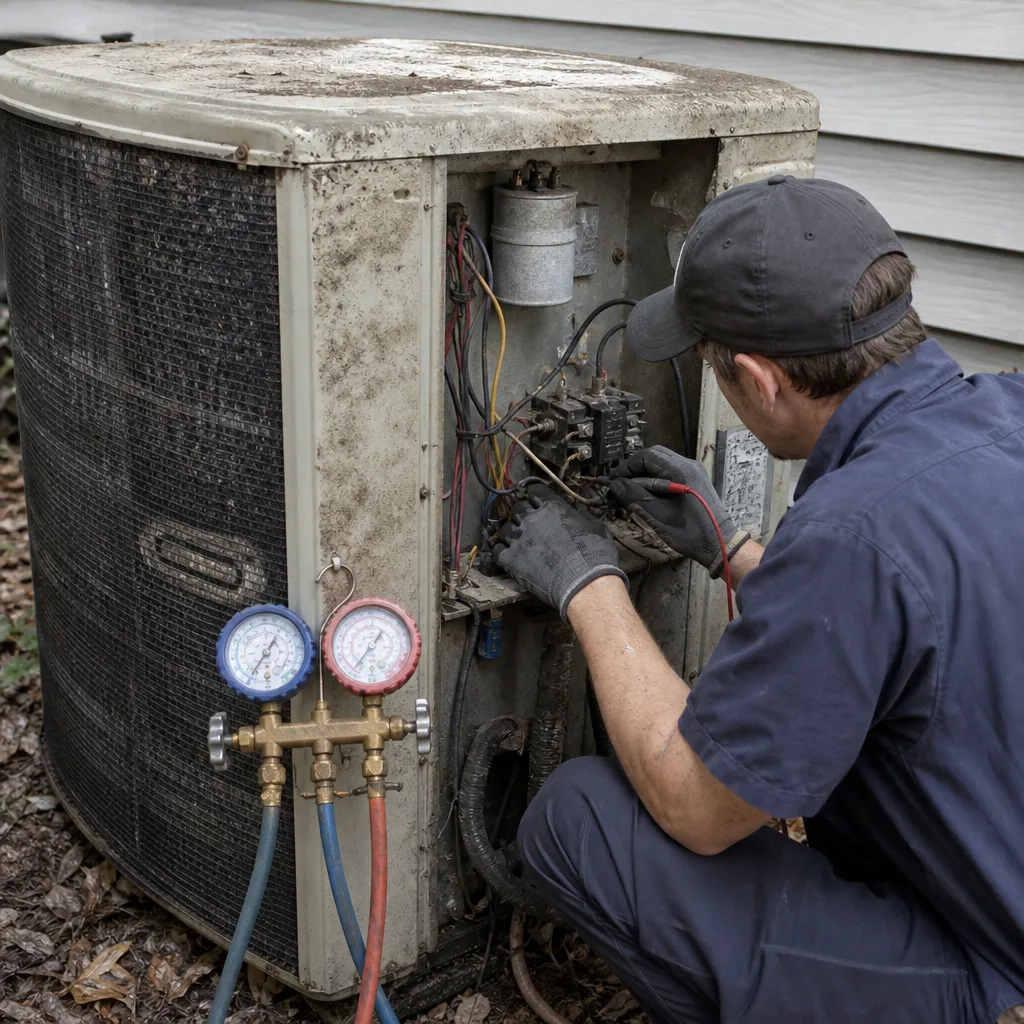 Before
 After
After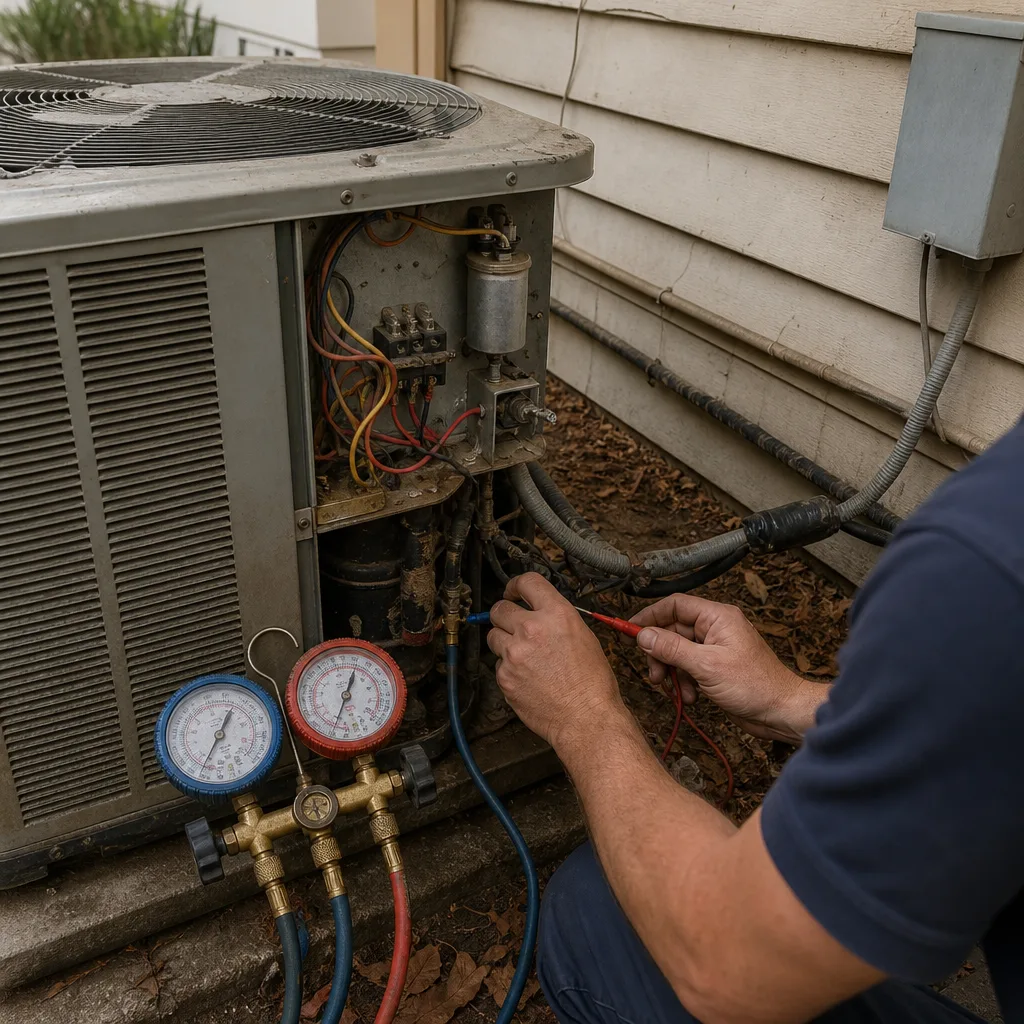 Before
 After
AfterReplacement Cost & What’s Included
In Atlanta, York ductwork repair jobs cluster in a few price bands depending on what we find:
- Sealing a small leak or reconnect a separated run: $150 – $300, parts and labor included.
- Replacing a section of damaged flex duct (10 – 20 feet): $250 – $450, depending on run length and accessibility.
- Replacing a collapsed trunk line or redoing a return plenum: $400 – $650, typically requiring custom sheet metal fabrication.
- Whole-home duct sealing and balancing: $400 – $700, depending on square footage and number of registers.
Every one of those numbers includes the written price up front, the actual repair, cleanup afterward, and our 365-Day Done Right Promise on the labor. That promise is on paper before we leave: if a repair fails inside a year, we come back and correct it at no charge. No arguments, no trip fees, no fine print. We also offer free estimates, so you can call us at (478) 223-8776 and get a real number before you commit to anything.
DIY or Call Us?
A homeowner can safely check a few things: feel along accessible duct runs for obvious separations or tears, check that visible registers are open and unblocked, and look at the flex runs in an open attic for kinks or collapse. Ductwork itself isn’t high-voltage or high-tension, so looking isn’t dangerous. But fixing it properly means working in a 130-degree Atlanta attic, crawling over joists, and making sealed connections that actually hold air, not just pressing tape over a tear and hoping it survives the next heat wave.
Where DIY typically goes wrong is sealing technique. Duct tape, the shiny gray stuff, does not work on ducts. Glue dries out in attic heat, the tape peels, and the leak comes back. Proper sealing uses mastic or UL-listed foil tape, and the joint has to be clean, the connection mechanically fastened, and the insulation replaced. That’s a skill, not a trick. If you’d rather have it done right the first time, with a written guarantee on the work, call us at (478) 223-8776. Tell Victor what you’re seeing, and he’ll tell you what it needs. No guesswork, no extras.
FAQs
Flex duct typically lasts 15 – 20 years in an Atlanta attic before the outer jacket deteriorates and the inner liner starts leaking; hard metal duct can last 30 – 50 years if it stays dry and sealed. The extreme attic heat in Georgia summers shortens flex duct life compared to northern climates, and critters (squirrels in particular) can damage runs at any point. Call (478) 223-8776 for an inspection if your ductwork is older than 15 years.
Yes, in most cases a single damaged section can be cut out and replaced with a new matching section, spliced with a metal collar and sealed properly. We only replace the full run when the damage is widespread, the insulation is compromised along most of its length, or the original sizing was wrong for your York system’s airflow. We’ll show you the damage and give you a written price for either approach before any work starts.
Most duct repairs take 1 – 3 hours, including setup, the repair itself, and cleanup of the area. Larger jobs like a trunk line replacement or whole-home sealing usually take a full day. We give you a firm arrival window when you book, and a live person answers our phone around the clock if you need to check on timing.
Yes, our trucks carry standard 4 – 12 inch flex duct, metal collars, mastic, foil tape, and the common boots and register boxes needed for most York system repairs. Odd sizes or custom sheet metal work are ordered and typically installed within a few business days. We also stock parts for Carrier, Trane, and Lennox systems, so the technician who shows up can match whatever your home actually runs.
If your York system is struggling to keep up, the ductwork is the cheapest thing to fix and the most likely thing to be wrong. Call Cold Harbour Heating and Air Atlanta at (478) 223-8776 for a free estimate. We’ll give you the straight answer and a written price before any work begins.
Written by Victor Mancini, Owner & Lead Technician, Cold Harbour Heating and Air Atlanta at Cold Harbour Heating and Air Atlanta, serving Atlanta and nearby areas.