
 Furnace & heating
 AC repair
 Heat pumps
 Ductless mini splits
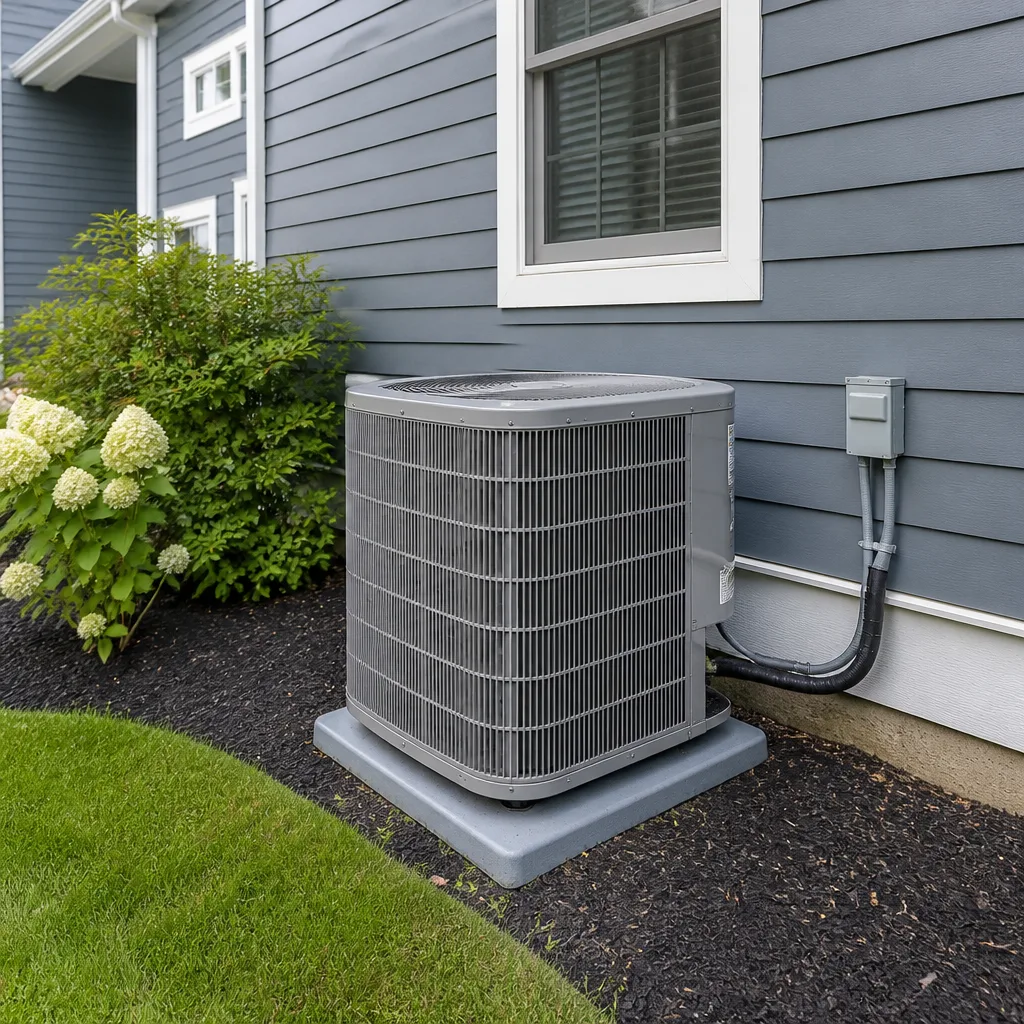 Carrier
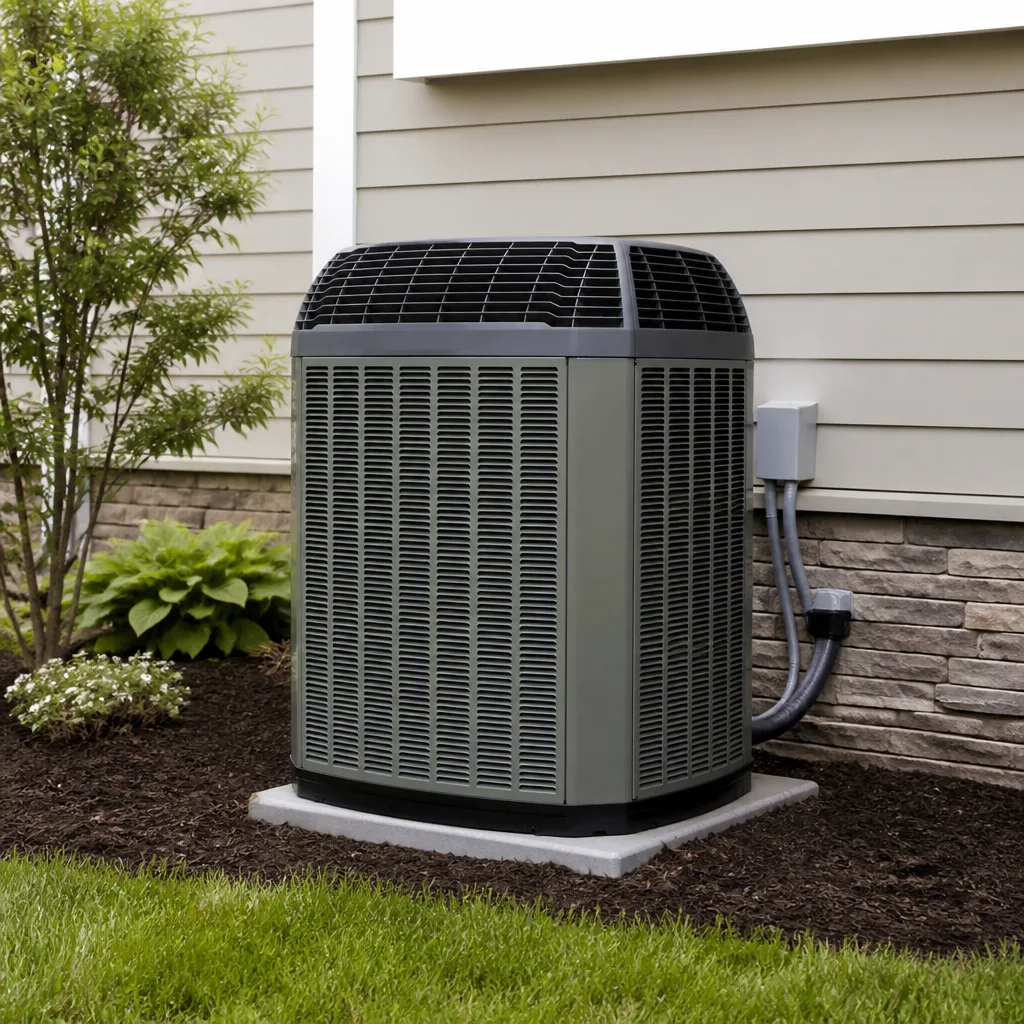 Trane
Trane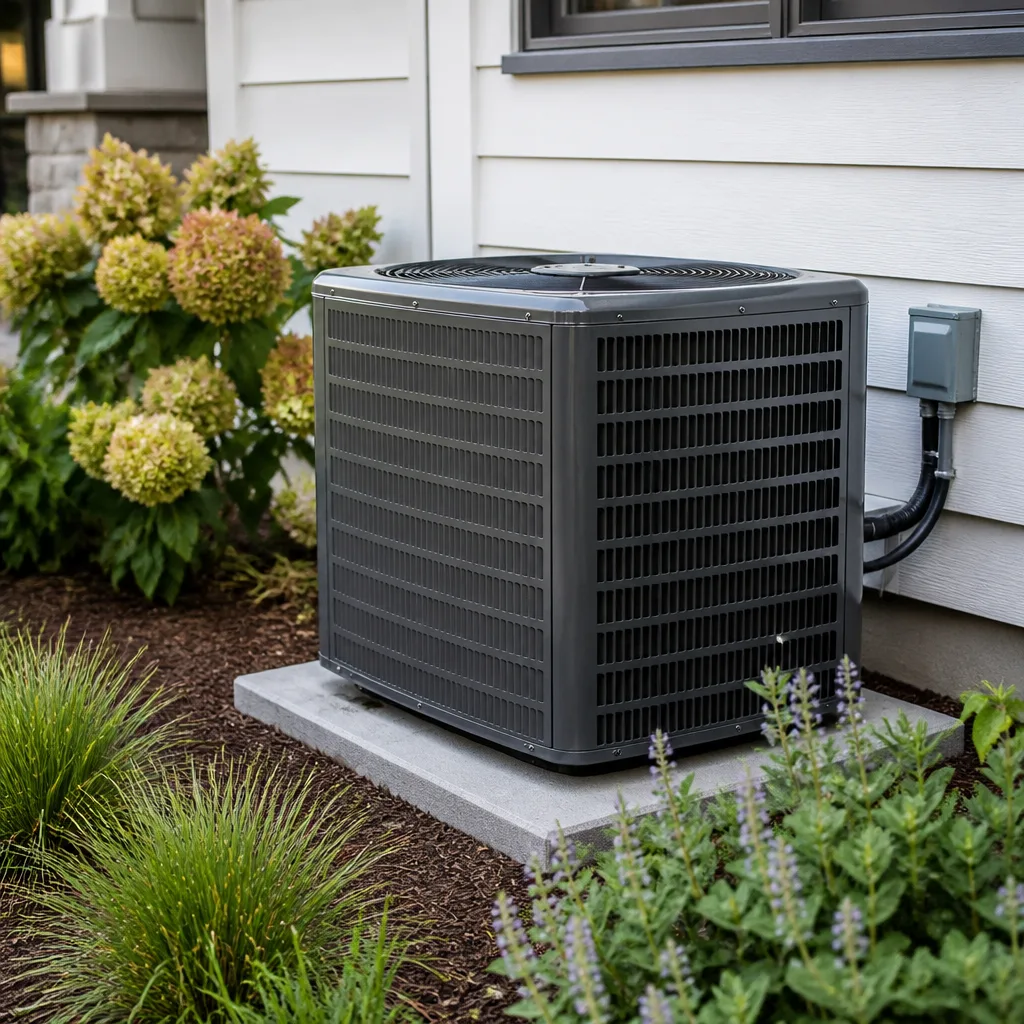 Goodman
Seasonal tune-up and full diagnostic on your Carrier, Trane, or Goodman system - readings shown to you before any repair is proposed
Diagnosis first, numbers second - you approve the repair price before a single part goes in.
Get your free estimateDaikin Heat Pump Service: The Atlanta Owner’s Guide
Daikin heat pump service in Atlanta typically runs $150 – $650 parts and labor, with most common component replacements like capacitors, contactors, and defrost boards falling in the $180 – $340 range. We stock Daikin-compatible service parts on our trucks and can usually diagnose and complete the repair the same day we arrive. Most Atlanta homeowners discover a part has failed when the system starts blowing lukewarm air, the outdoor unit won’t kick on, or ice builds up on the coil during a mild winter day. Cold Harbour Heating and Air Atlanta is an independent service provider, not affiliated with Daikin, but our technicians train on Daikin-specific service procedures and carry the parts that fail most often in Georgia’s heat and humidity.
Which Daikin Models This Applies To
Daikin builds heat pumps under three main residential lines: the entry-level Daikin Fit (DZ series), the mid-range Daikin VRV Life (RXTQ series), and the premium Daikin Aurora (RZQ/RXQ series), designed for colder climates but popular in Atlanta for its efficiency ratings. The model number is printed on a data plate on the side of the outdoor unit, usually starting with “DZ,” “RZQ,” or “RXTQ,” followed by a three-digit size code that tells you the capacity in thousands of BTUs. That number matters because Daikin parts are not universally interchangeable across series. A defrost control board from a DZ14 won’t plug into an RXTQ36, even though both are “Daikin heat pumps.”
On the OEM versus aftermarket question: Daikin’s genuine OEM parts carry a manufacturer warranty and are matched precisely to the system’s control logic. Quality aftermarket equivalents do exist for wear items like capacitors and contactors, and they can save 20 – 40%. For boards, sensors, and inverter-driven components, we recommend OEM every time. Daikin’s inverter systems communicate between the indoor and outdoor units in ways a generic board simply doesn’t understand, and the wrong board can leave you with a system that runs but never quite behaves. We carry both options on the truck and we’ll show you the price difference before we touch a screwdriver.
Styles & brands we work with
Signs Your Daikin Heat Pump Service Is Failing
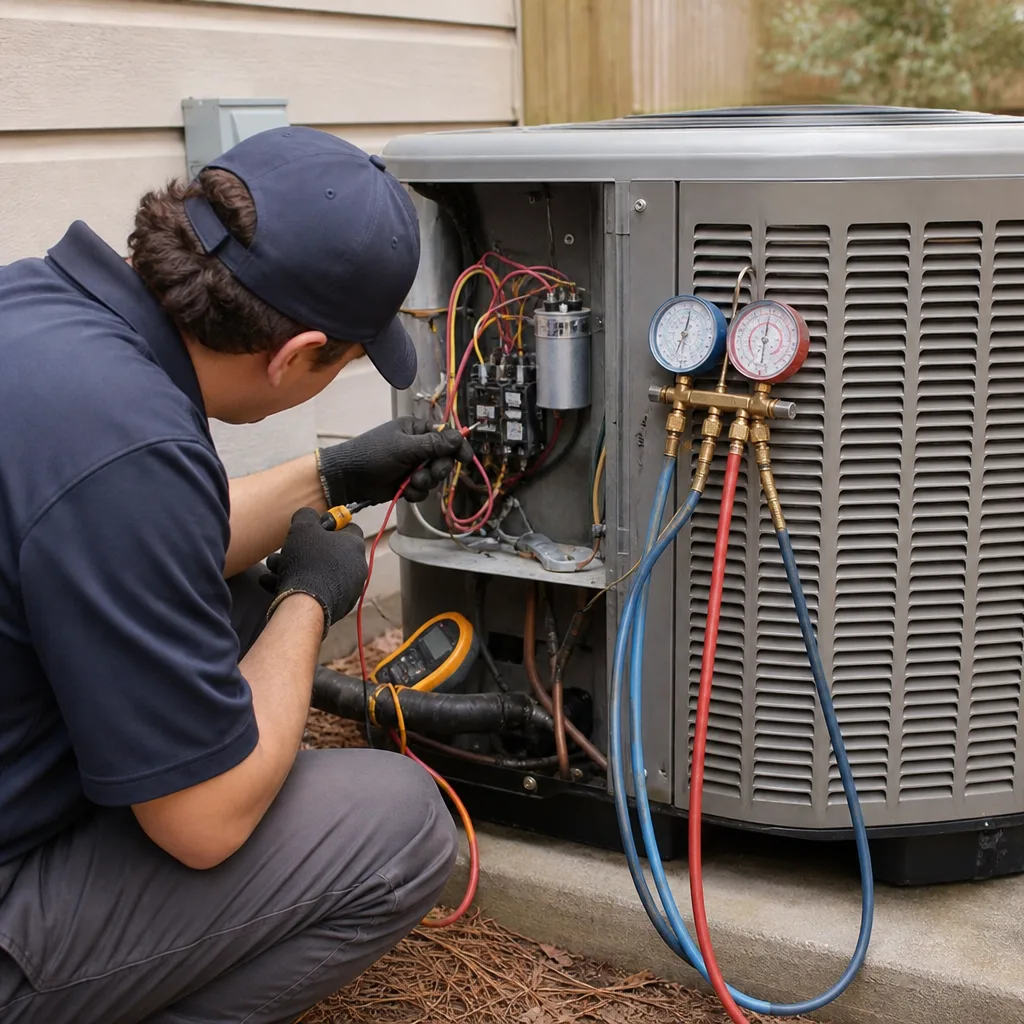
- Outdoor unit hums but the fan won’t spin or the compressor won’t start. That’s almost always a failed run capacitor, the single most common Daikin heat pump part we replace in Atlanta. The capacitor gives the compressor and fan motor the electrical shove they need to start, and Georgia’s summer heat cooks them faster than almost anything else.
- System blows air, but it’s not warm in winter or cool in summer. A compressor contactor that’s pitted or welded will prevent the compressor from engaging at all. The indoor blower keeps running because it’s on a separate circuit, so the house feels like the system is working when it isn’t doing anything.
- Ice builds up on the outdoor coil when it’s above freezing outside. Your defrost control board or defrost sensor has failed. Daikin systems run a defrost cycle automatically to keep the coil clear, and when that board quits, the coil ices over and the system loses efficiency fast. We see this regularly in Atlanta’s damp winters.
- System short-cycles, turning on and off every few minutes. A failing thermistor or pressure switch is sending bad data to the control board. The board thinks the system is overheating or overpressurizing and shuts it down, waits, restarts, and repeats. It’s hard on the compressor and it’ll raise your electric bill while it does it.
- You hear a rattling, clicking, or grinding from the outdoor unit. That’s often a failing fan motor or worn fan blade bearing. On Daikin units especially, a fan motor that’s on its way out will run hot and eventually seize, which can take the control board with it when the locked-rotor amps spike.
See the difference
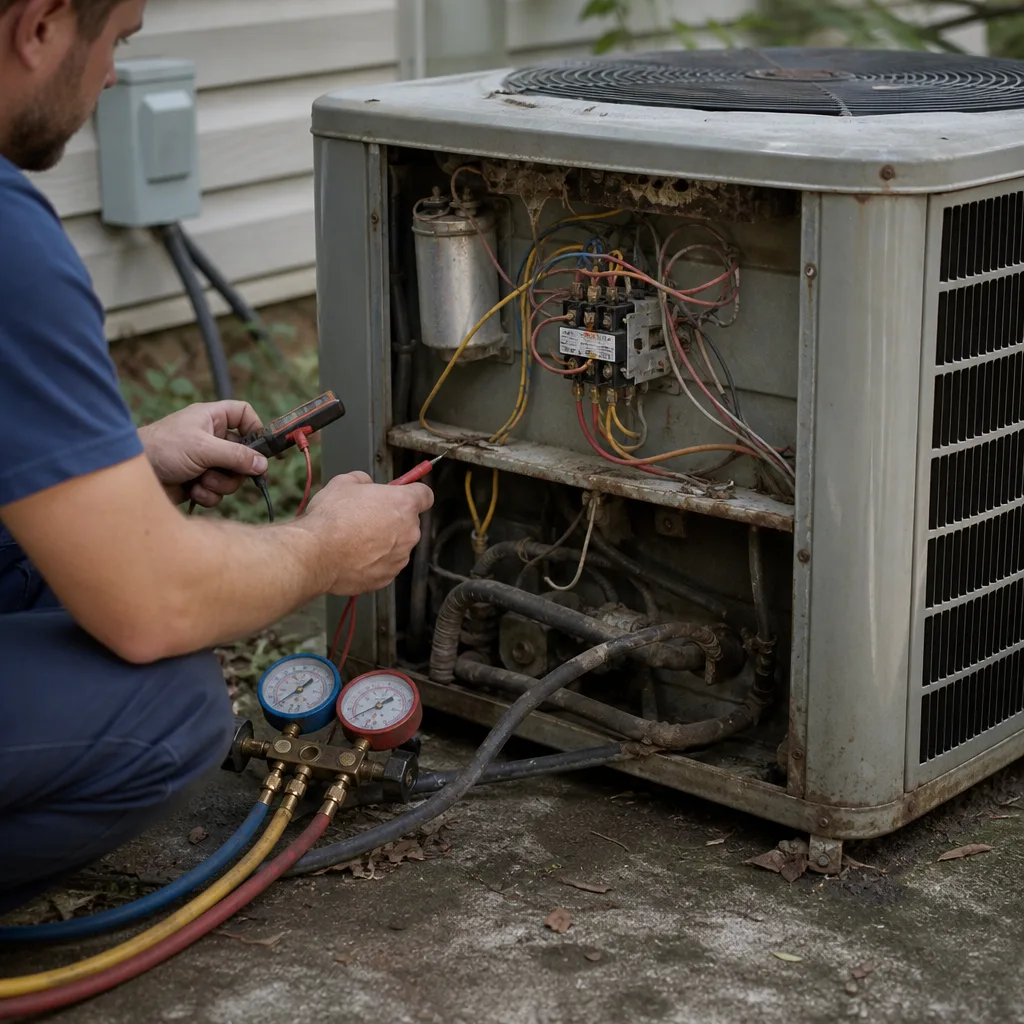 Before
 After
After Before
 After
After Before
 After
AfterReplacement Cost & What’s Included
A Daikin heat pump capacitor replacement in Atlanta runs $150 – $280 installed. A contactor runs $120 – $220. A defrost control board is $250 – $450. A fan motor replacement runs $300 – $600 depending on whether it’s a standard condenser fan motor or a Daikin variable-speed ECM motor, which costs more. The single biggest price driver is the part itself, and Daikin parts priced as OEM are generally 15 – 30% higher than generic equivalents, which is the honest trade-off for exact-spec engineering. Labor in our Atlanta market is the smaller piece, typically 60 – 90 minutes of work for a standard component swap.
Every quote we give includes the written price before the work starts. That price covers the part, the labor, the diagnostic time already spent, and the written 365-Day Done Right Promise. If that same part fails within a year, we come back and fix it at no charge. That’s not conditional. It’s on paper before we leave the driveway.
Daikin Heat Pump Repair Costs in Atlanta
- Capacitor replacement: $150 – $280
- Contactor replacement: $120 – $220
- Defrost control board: $250 – $450
- Condenser fan motor: $300 – $600
- Thermistor or pressure switch: $150 – $300
- Diagnostic fee (waived with repair): $80 – $150
DIY or Call Us?
A homeowner can safely check a few things before calling: make sure the thermostat is set correctly, check the breakers at the panel, and confirm the air filter isn’t bad enough to choke airflow. That last one matters more than people think. A filter so clogged the system can’t breathe will cause short-cycling and ice that looks identical to a failed defrost board. Beyond those checks, a heat pump is not a good DIY project, and here’s the honest reason: the capacitor that starts the compressor holds a charge strong enough to hurt you even when the power is completely off. If you don’t handle it correctly, it can hold 300+ volts waiting for you to touch the wrong terminal. Boards, sensors, and inverter components carry their own risks, and a misdiagnosis means buying a $400 part that was never the problem. If you’re seeing any of the symptoms above, call us at (478) 223-8776. Victor Mancini will tell you what it’s doing, and we’ll tell you what it needs, no guesswork, no extras.
FAQs
A well-maintained Daikin heat pump in Atlanta typically lasts 10 – 15 years, with the outdoor unit taking the brunt of Georgia’s heat and humidity. Components wear unevenly: capacitors and contactors are the first to go, usually in year 5 – 8, while the compressor and coil are built to run the full service life. Regular tune-ups are the single best way to stretch that lifespan. Call (478) 223-8776 to schedule a Daikin-specific tune-up.
For mechanical wear parts like capacitors and contactors, no: they’re sealed, inexpensive, and not repairable. For boards, occasionally a failed solder joint or relay can be reworked, but it’s rarely worth the labor versus a replacement that carries a full warranty. We’ll always show you the repair-versus-replace trade-off before recommending anything.
Most common part replacements, a capacitor, contactor, defrost sensor, or fan motor, take 60 – 90 minutes on site once we have the part in hand. We keep the most common Daikin service parts stocked on our trucks in Atlanta, so the fix is usually done the same visit, not scheduled for a second trip.
Yes. We carry the high-failure Daikin parts, capacitors, contactors, defrost sensors, common boards, on our trucks across Atlanta every day. We also stock equivalent parts for Carrier, Trane, and Lennox systems. If a part is unusual, we can order it and typically have it installed within 2 – 3 business days. Call (478) 223-8776 and we’ll check stock while you’re on the phone.
Written by Victor Mancini, Owner & Lead Technician, Cold Harbour Heating and Air Atlanta at Cold Harbour Heating and Air Atlanta, serving Atlanta and nearby areas.